Lives Matter? Really? Are You Sure?

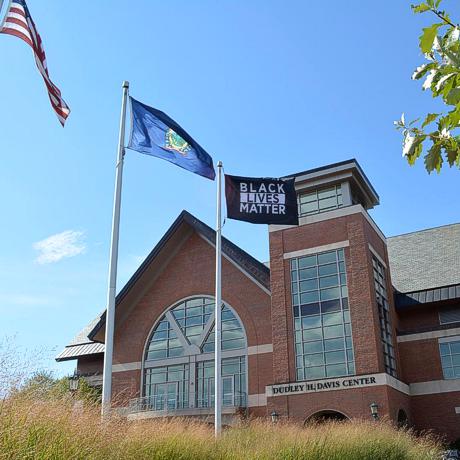
The Student Government Association ran a Black Lives Matter flag up the University of Vermont flagpole on Thursday. Not everyone is saluting. Flags representing other groups have flown from the same flagpole.

A number of dissenters think “All Lives Matter” in ultra-diverse Vermont and especially should at our public ivy.
Establishing a diverse and inclusive culture is a priority at the University of Vermont. In fact, UVM holds that diversity and academic excellence are inseparable.

But only black lives matter.

“The #BlackLivesMatter flag that was casted on UVM’s campus yesterday makes me proud to be a Catamount.” Cassidy Derda (@m1ss5cass) tweeted Friday.

“Casted”?

“The University of Vermont is a place to learn and to teach. It is not a cloister — it does not live in a vacuum. It is both in the world and of the world. Its mission is to educate people for leadership in society.”

“Casted”?

But in the UVM society only black lives matter.

Or do they? Really?

“My body filled with lots of joy to know that my predominantly white university is paying tribute to the deaths in the black community,” student Akilah Ho-Young posted on Facebook. Turns out that I’m not black, my voice doesn’t matter.

Black lives do matter, but those raising flag do so to shut down discussion.

“Sometimes it does,” Liz Arden said. “Often it’s done to raise awareness of the injustice perpetrated by ‘roidal cops and others.”

That’s what all the protesters, including those at UVM, would have us believe. The effects are different.

“But it is so easy to co-opt the flag,” she said.

I have no problems with pointing out injustice but, sadly, the we-need-to-protest-the-injustice people have been co-opted by the KILL THE COPS! people. Here, for example, the Black Lives Matter “protesters” chant “Pigs in a blanket, fry ’em like bacon!”

The statistics are interesting. About 1.0 white person per 100,000 kills other white people. Likewise about 1.0 black person per 100,000 kills white people. About 0.1 whites per 100,000 kill blacks. About 5.4 blacks per 100,000 kill other blacks. A Washington Post real-time database tracks fatal police shootings. As of this morning, 1,697 people have been shot and killed by on-duty police officers since Jan. 1, 2015. 827 were white and 430 were black. The remaining 440 were divided into other or unknown races. The Post says it’s “impossible to calculate the percentage of police shootings that are legitimate.”

“I’ve seen statistics like those,” Ms. Arden said. “Poor people are easy prey. Poor people in reach of criminals are even easier prey. So it’s not surprising.”

Sure.

But the welfare state keeps people in poverty so that’s not the solution and in the meantime, cops have to respond to the crimes that have been committed and the big news is that black on black murder is about five times more likely than white on white. Where do you think crime prevention efforts should go?

How about we say Crime Matters?
This year, I’ll prosecute the rioters and looters and illegal aliens and traitors and cops who unlawfully kill whites and the blacks who kill cops while you prosecute the cops who unlawfully kill blacks.
Next year we switch.

UVM president Tom Sullivan stands behind the student government’s decision to display the flag.

I wonder if students could fly the Tea Party banner there or raise the flag for “Illegal means Against the Law” or for “Christians Have Religious Freedom, too.”
 

Run It Up the Flagpole

This is a special “extra” feature for Lives Matter? Really? Are You Sure?, an outtake from the original story above.

The UVM Student Government Association ran a Black Lives Matter flag up the flagpole on Thursday. Not everyone is saluting. The black flag is flying next to the American flag and the Vermont state flag in front of the UVM student center. Flags representing other groups have flown from the same flagpole.

Many dissenters think reported that an organizational flag should not be flown at the same height as the American flag, period. Especially at a place of higher learning.

The United States Flag Code establishes the rules for display and care of the national flag of the United States of America. It is a federal law, but the penalty for failure to comply with it is not enforced.


When the United States flag is displayed with the flags of states of the union or municipalities, and not with the flags of other nations, the federal flag, which represents all states, should be flown above and at the center of the other flags. The other flags may be the same size but none may be larger.

Displaying flags from different causes is probably OK in the UVM context but UVM itself, in providing the pole they ran it up, obviously violates the U.S. Flag Code.

Now back to the Black Lives Matter protestors…


Road Trip, XVI-2

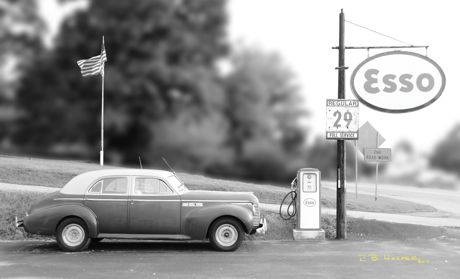
My folks never needed to wait for Labor Day to take a road trip. I was not born in the back seat of a 1940 Buick but I might have been if my dad hadn’t gotten a job the week before. [From Road Trip 2013]

1940 Buick Special

Rufus sent me an advertisement flogging the five most awesome American roads to drive. I wrote about it then and it’s time to revisit it now.

See, I have a new truck, a tankful of gas, and a desire to leave North Puffin before it gets really cold and not get to South Puffin until it cools off. And until Colonial gets the pipeline fixed. The North Carolina price gouging law has taken effect. It doesn’t help.

“We’ve seen fuel disruptions like this before and want to reassure people that there’s no need for alarm at this time,” said NC Public Safety Secretary Frank Perry.

OK. I’m definitely following Horace Greeley‘s advice.

I’m plotting a road trip for October. I have a yearning for the blue routes: diagonally down toward the Southwest on the outbound leg and then along the southern border to home.

You may recall my obsession with the Not So PTT. “I can fit SWMBO and everything I have to carry and even an RV-size washer-dryer into a cargo trailer. There’s room for the three-esses, room to cook, room to sleep, room to poke a ‘puter,” I wrote. “There is not room to change your mind.”

Good sense prevailed. I was well aware that this $5-10,000 solution would cost me twice as much in twice as much gas as just driving, all so I can save $30-40/night on motel rooms and sleep in a Walmart parking lot for free! That and the couple year build time meant I couldn’t have it ready to leave in a couple of weeks.

Since I decided against the cargo-trailer-cum-camper, I’ll couch surf with friends if I can find any and otherwise hit the Motel 4-1/2s along the way. It’s sort of the 5,000 mile long way around from North to South Puffin.

Hint to old friends and friends I don’t know yet: if you recognize any of the places on my route, I’m open to suggestions for anything from a quick beer to a free night on your couch. I am (mostly) housebroken.

I’ll leave North Puffin the first week of October.

I’d like to see the USS Cod submarine and the Statue of the Flying Housewife and maybe take an Airstream Factory Tour and, of course, see the happy Blue Whale of Route 66. As usual, I’ll try not to go too many places I’ve been before.

Having said I won’t go anywhere I have been, I’ll make my first stop in Bethlehem, Pennsylvania because my Aunt Dot who turns 96 this year lives there. She and my folks met when they all lived in an apartment house in Philly before I was born; I spent time every summer with her boys in Annapolis and they with me.

I’ve discovered that a number of US cities that have state names. I’ll have to miss Wyoming, Minnesota, or Minnesota, California and Google has never heard of California, Georgia, but I put California, Pennsylvania on the list first and I might make it through Kansas, Vermont, and Georgia, Kansas, outside Wichita, as well as Vermont, Indiana, just before I get to Kokomo which I want to visit because I like the name. I’ll probably miss Indiana, Pennsylvania, but I might make it through Pennsylvania, Alabama on my way back. Sadly, I can’t get to Alabama, New York but I’ve been in Florida, New York, and I’ll try to find New York, Florida, but Florida, Ohio, is also probably too far north of my route. On the other hand Ohio, Texas, is a possibility but Texas, Maryland, will have to wait until I come back north. Maryland, Louisiana, is sort of on the way from Shreveport but I could see going through Louisiana, Missouri.

Martin’s Ferry and maybe Moundsville, West Virginia sound interesting.

I may have to leave the Police Museum and the USS Cod for another trip because Cleveland may be too far north. Jackson Center for the Airstream Factory Tours is a bit north of my route, too, if I want to see the Statue of the Flying Housewife in Columbus. Dayton, where my Aunt Betty lived, has the Carousel of Inventions.

It’s a couple of hours out of my way but I’ll probably head up to West Lafayette, Indiana, to see where my cousin and his family hang their hats. I won’t stop in Huntington, though, because I don’t know anyone at Shuttleworth Conveyors there anymore. It would be good to stop in Brazil because there are no mosquitoes and get fired up over St. Elmo, Illinois, because how could I not?

Can you drive a truck through the St Louis arch?

I’ll more or less follow the Mother Road from there.

The Mark Twain National Forest has 1.5 million acres of beautiful public land with sections of the Ozark Trail and the historic Greer Roller Mill. Maybe I’ll get the lead out in Joplin, Missouri and I have to stop in the railroad town of Chandler, Oklahoma, simply because my grandmother was a Chandler.

Amarillo calls me because it was the “Helium Capital of the World” and that is lighter than air. That city has one of the largest meat packing plants in the United States, right next to the only nuclear weapons assembly and disassembly facility in the country. (Really, it’s the Cadillac Ranch that I want to see.)

Unfortunately, I’ll be too late for the Albuquerque International Balloon Fiesta with over 500 kaleidoscopic hot air balloons rising up at dawn over the New Mexico landscape but I’ll likely stop at the National Museum of Nuclear Science & History and the Anderson-Abruzzo International Balloon Museum. I’ll stop at the Western New Mexico Aviation Heritage Museum in Grants, New Mexico.

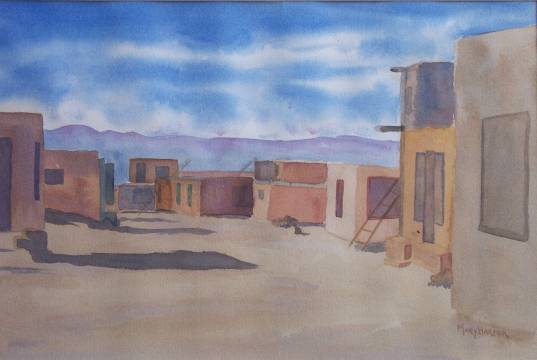
Acoma PuebloPetrified ForestI definitely want to see the new Eagle Aviary in Window Rock and float around that part of New Mexico and Arizona (Tsé Bii’ Ndzisgaii, or valley of the rocks) that includes the area surrounding Monument Valley Navajo Tribal Park, the Navajo Nation equivalent to a national park where my mom painted.

The westward leg will end in Paradise Valley.

I’ll rest out there before heading east along the southern border; that’s a story for our next installment.

It will be good to get away from the idlers and imbeciles running toward November 8.


It’s the View

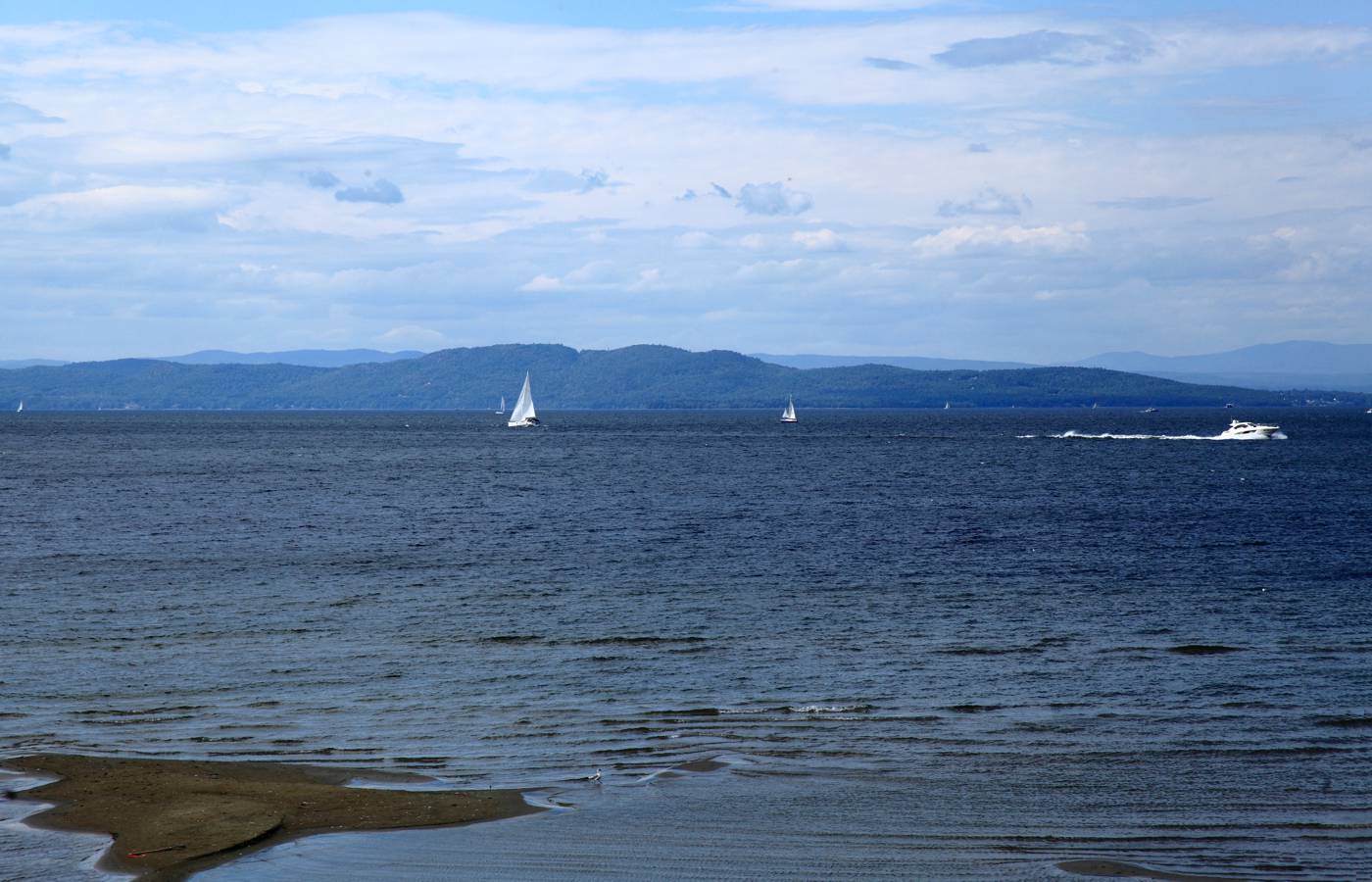
The St. John’s Club in Burlington has about the second best view on Lake Champlain because most members love looking at the lake but think it would be more better perfect if they could see the lake and the Green Mountains instead of the newer mountains in the adjoining state.

View of the Broad Lake from the St. John's Club

No matter.

It is indeed one of the great spots to watch the sun set on Lake Champlain and a favored place for weddings and receptions.

Ethan de Seife called the St. John’s Club, a Lakefront Club for the Average Joe and that’s praise indeed. The “social club” was a founded as a men-only laborers’ drinking hall by the Francophone mill workers of the Union St.-Jean-Baptiste about 150 years ago. It has owned its home on the lake since 1964. “Same-sex couples, dancing cheek to cheek, shared the floor with retirees, twenty-somethings, and clients and employees of the Howard Center,” Mr. de Seife wrote. “No single word describes the scene more aptly than ‘unpretentious’.” The club even has Friday karaoke nights, a regular event that welcomes nonmembers.

SWMBO married a couple there Saturday.

One of the guests asked how long she had been doing this. SWMBO counted on her fingers and realized that she’s been a Justice of the Peace for about 18 years; she stands for re-election again this fall.

Vermont’s first governor began his public life as a justice of the peace in Salisbury, Connecticut, before he bought a tract of land along the Onion River in what is now Williston, Vermont.

Today the JP serves as an election official, decides tax appeals, and swears in new voters and may administer other oaths whenever an oath is required. A justice of the peace is a notary public ex officio and may also serve as a magistrate when so commissioned by the Supreme Court. And they can perform marriage ceremonies.

SWMBO lost a close election about a decade ago when eight candidates ended up on the ballot. Fortunately, the governor may fill any vacancy that occurs by resignation, death, or insanity so then-Governor Jim Douglas reappointed her when that did happen.

Most of Vermont was under threat of rain as a frontal boundary approached and brought a pretty good chance of showers for the entire wedding afternoon and through the night. It coalesced into a thin band of rain that sent wind ahead of it and stalled until late that evening. A lightning bolt across the highway woke me about dawn on Sunday but the rain itself had held off until after the reception.

The wind came in early and blew over the arbor. SWMBO caught it. JPs have many mandatory duties.

Kids and grownups, university folk and service people, firemen and contractors, and even a meteorologist, all in ties and long dresses and long pants, as well as the taxi driver in shorts who came in very late attended the festivities.

During the rehearsal, the groom kept asking “Can I kiss her now?”

SWMBO waited until after the readings and a prayer to say to the groom, “Alright, you may now kiss … her hand.”

After the real kiss, the entire wedding party waded out across two sand bars for photos and laughter. Just so you know, I wore the shorts when I arrived to pick up the JP but I also wore my second best blue dress shirt. The bride’s parents invited me to stay.

Nice people, great spot, beautiful day, blessed event.

We love it when a plan comes together.


Arts in Education

Join area artists and arts councils to celebrate National Arts In Education Week. It begins today and continues through September 17.

You can take part. Take just a couple of minutes to write a Letter to the Editor of the Courier, Free Press, the Messenger or your own hometown paper. Tell your story of why the arts in education matter to you.

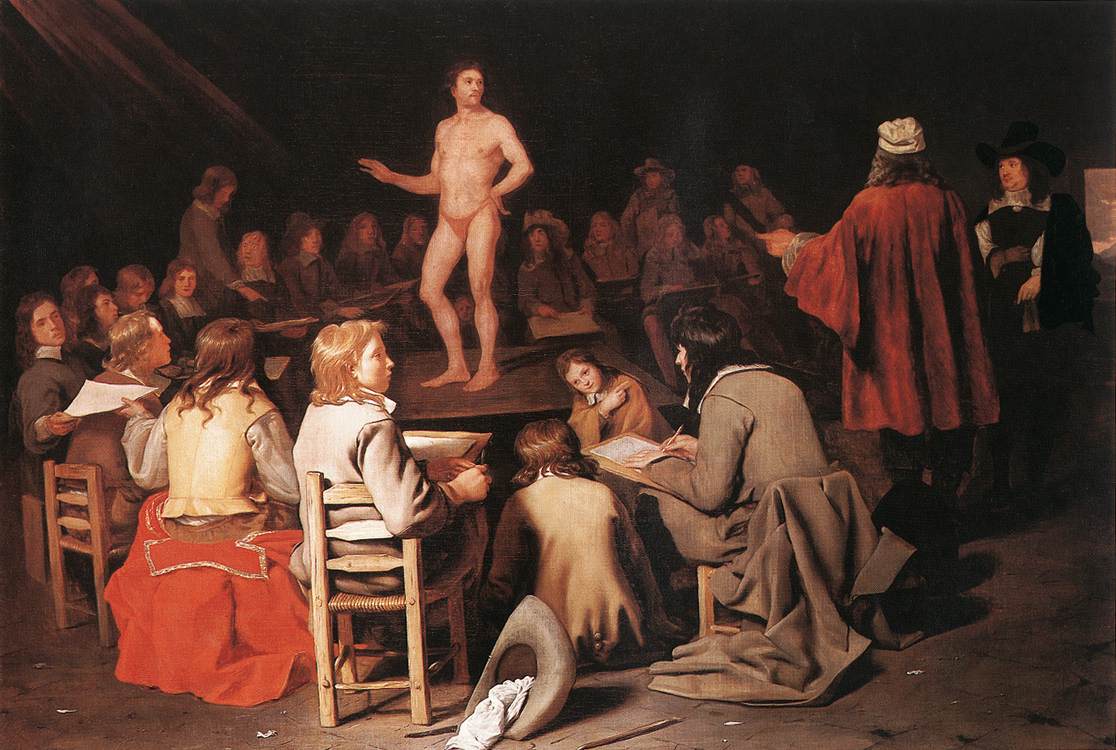
The Drawing Class

Designated by Congress in 2010, House Resolution 275 names the week beginning with the second Sunday in September as National Arts in Education Week. During this week, the field of arts education and its supporters join together in communities across the country to tell the story of the transformative power of the arts in education.

In 2016, it is a particularly important time to celebrate arts education, as we usher in a new chapter of American educational policy with the new “Every Student Succeeds” Act and its many arts-friendly provisions. In the new law, the arts remain a well-rounded subject and are empowered to be central to a child’s education in our public schools. More importantly, music helps kids learn math. Art helps kids learn language. Reading helps kids learn to write.

Our municipal, school, and state leaders need to know about the impact the arts have on young peoples’ lives and that they must support the arts in every district and every school in America.

After sending in your letter to the editor, you can join the movement of thousands of arts education advocates celebrating National Arts in Education Week. Contribute to the visibility campaign on social media during the week of September 11-17, 2016 by using the hashtag, #BecauseOfArtsEd. People from all walks of life can share their story of the transformative power of the arts in their own education and the impact the arts have had on their work and life.

Here are some ways to participate:

• Write a letter. Take two minutes to write a Letter to the Editor of the Courier, Free Press, or Messenger. Tell why the arts in education matter to you.

• Post on Facebook. Tell the world your #BecauseOfArtsEd story on Facebook. Describe what you are doing now in work and life and how arts education has a positive impact with a photo! Be sure to use #ArtsEdWeek, too.

• Send a tweet. Share your quick #BecauseOfArtsEd story on Twitter. Be sure to include an image or video along with #ArtsEdWeek.

• Share a photo. Post your favorite arts education photo on Instagram along with your #BecauseOfArtsEd story about the impact of arts education on your life. Be sure to use #ArtsEdWeek.

And be sure to send your letter or tweets to your school board and to our representatives in Montpelier and in Washington.