
Wordless Wednesday

If you came here expecting a discussion of the corn used to make fine Kentucky whisky, move along. This is about photography.
A recent Miami Herald article about a West Palm Beach museum includes a shot of photographer  Annie Leibovitz aiming a point-and-shoot camera at the reader. Kind of reminds us that a great photographer can take a magnificent picture with pretty much any box with a hole in one end.
But she still has to print it. That’s where I run into difficulty.
If Ms. Leibovitz printed her photos to fit in a standard frame with a pre-cut mat, (most) arts and crafts stores carry frames and mats with openings in only these sizes:
| Frame Size | Mat Opening | Image Size | Aspect Ratio |
| 5″ x 7″ | 3.5″ x 5.5″ | 4″ x 6″ | 1.5 |
| 8″ x 10″ | 4.5″ x 6.5″ | 5″ x 7″ | 1.4 |
| 11″ x 14″ | 7.5″ x 9.5″ | 8″ x 10″ | 1.25 (about 5:4) |
| 16″ x 20″ | 10.5″ x 13.5″ | 11″ x 14″ | 1.27 |
| 20″ x 24″ | 15.5″ x 19.5″ | 16″ x 20″ | 1.25 |
| 24″ x 36″ | 19.5″ x 29.5″ | 20″ x 30″ | 1.5 (exactly 3:2) |
| 30″ x 40″ | 21.5″ x 31.5″ | 22″ x 32″ | 1.45 |
(Frame and mat openings vary from manufacturer to manufacturer.)
Most digital point & shoot cameras had an aspect ratio of 1.33 (4:3), the same as analog television or early movies. However, a 35 mm picture’s aspect ratio is 1.5 (3:2). This means that the long side is 1.5 times as long as the short side. Several digital cameras take photos in either ratio, and nearly all digital SLRs take pictures in a 3:2 ratio, as most can use lenses designed for 35 mm film.
The Advanced Photo System (APS) film, a now-discontinued film format for still photography, has about a 7:4 aspect ratio, coincidentally almost perfect for HDTV except for how lousy an enlargement APS film yields. In 2005 Panasonic launched the first consumer digital camera with the very similar aspect ratio of 16:9; that matches HDTV and is the same as Ms. Leibovitz’ Canon G-15. 16:9 is the same as 1.77 which you might notice matches none of the standards in the table above.
Confused yet? Me, too.
I’ve taken thousands of photos with either a Kodak or Minolta digital. The Kodak has a 1/1.76″ (7.3 x 5.5 mm) CCD sensor, the Minolta a slightly larger 2/3″ (8.8 x 6.6 mm) sensor. Both are on the sweet spot 1.33 aspect ratio which means I had to throw away part of the picture for all their 8 x 10″ and 11 x 14″ prints in the gallery.
That’s one reason I changed to a full format digital for most shoots.
All these different aspect ratios is why everyone has cropping issues when printing photos. An aspect ratio of 4:3 translates to a print size of 4.5″ x 6.0″. This loses half an inch when printing on the “standard” of 4″ x 6″ with its aspect ratio of 3:2. Similar cropping occurs when printing on other sizes, i.e., 5″ x 7″, 8″ x 10″, or 11″ x 14″. In fact, the only two “standard” print sizes that capture all of the frame of a full frame digital or its 35mm uncle are 4″ x 6″ and 24″ x 30″.
There’s not much market for 4″ x 6″ or 24″ x 30″.
On the other hand, there’s a lot more market for 16″ x 20″ or 24 x 30″ than for a post card size print and I couldn’t reliably enlarge my early work to those sizes.
I want to compose in the viewfinder so I want to print what I saw. I’m homing in on 10″ x 15″ and 14″ x 21″ as the “usual” enlargements in my own gallery. The first is perfectly sized for the standard 16″ x 20″ mat; the latter for a 20″ x 28″ which is fairly large. Now all I need is a processor who can print them. And a mat cutter ditto.
Of course, every photographer has great photos in some odd-ball format, so I’ll print that palm tree with the sap bucket at 10:1 and frame it vertically. I’m working on an interesting 3:1 panorama that I will probably print on canvas and display as a loooooooooooooooog horizontal triptych.
I hope you’ll buy them anyway.

CBS started its Super Bowl coverage this morning at 11 a.m. Eastern time. The game starts at 6:25 or 7 p.m. or so.
“We really hope for an overtime game,” one of the reporters said.
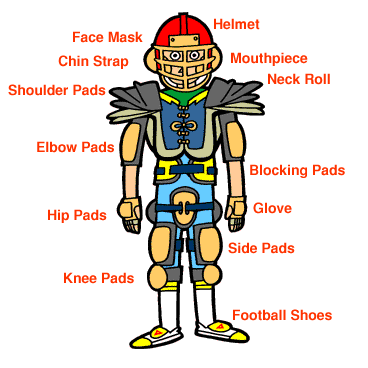 Like 111 million other red blooded Americans, I’ll tune in, although I almost never watch football and I still think the Baltimore team should be the Colts.
NFL Commissioner Roger Goodell is addressing player safety including his plan to have an HGH testing program in place for the 2013 season, neurologists on the sidelines, and talks with NASCAR and others about equipment. From shoulder pads to the “Rooney Rule” to the low hit rule, football rules are ever evolving.
Racing Gets Safer
The Parisian magazine Le Petit Journal held the world’s first motoring competition in 1894; sixty-nine cars vied to start the 127 km course from Paris to Rouen but only 25 ran.
Attilio Caffaratti was the first reported fatality in racing. He crashed in the Brescia-Cremona-Mantova-Verona-Brescia in 1900. The French Gran Prix killed Antonio Ascari in 1925. Jim Clark died in a Formula 2 race in Hockenheimring in 1968 and Jerry Titus at Road America in 1970. Mark Donohue died practicing for the 1975 F1 race at Österreichring. The 2001 Daytona 500 claimed Dale Earnhardt. Dan Wheldon died in a 15-car IndyCar crash at Las Vegas in November. 56 drivers have died in major races at Indianapolis Motor Speedway, 48 at Nürburgring, 30 at Monza, and 24 each at Daytona and Le Mans.
State of the Art
Where better than auto racing to learn about safety equipment?
Racing safety equipment has mostly followed tragedy. Helmets, seatbelts, on-board fire extinguishers, fire proof driving suits, five-point safety harnesses, fuel cells, ever safer racing seats and HANS devices, “soft wall” technology, and more all came after head injuries, thrown drivers, fires, and crashes.
Safety didn’t come easily.
“Those early helmets were like wearing a flower pot on your head with leather straps,” NASCAR Champion driver Ned Jarrett said. “At the time, we felt like it was the state-of-the-art helmet because that was about all you could get.” Sort of like the helmets high school kids used for football when I was in school. It wasn’t until recently that oval track drivers were required to wear gloves.
The history of auto racing saw crash helmets arrive in the ’40s, roll bars in the ’50s, the roll cage in the ’60s. Sports Car Club of America recommended a roll cage (but required only a braced hoop toll bar) when I built my first A-Sedan Camaro in 1971; I installed a full cage similar to NASCAR’s full enclosure with door bars and a snoot hoop. That saved my bacon at Charlotte Motor Speedway.
Rules Changes
“The NFL changes the rules every year,” Mr. Goodell said innocently.
So do most motorsports groups. Football players keep getting bigger and racecars keep getting faster.
Cool.
OK, now it’s time for the important part of the day.
There is still time to sign the Declare the Monday Following the Super Bowl a National Holiday petition at whitehouse.gov.
The 55th annual Daytona 500 will begin at 1 p.m. on Sunday, February 24. That’s the day after the petition drive ends.

“Did he mean this as a joke?”
Some back story: A few election cycles ago, conservatives formed Take Back Vermont in response to the then-new law that established civil unions for same-sex couples.
Take Back Vermont wanted to do more than repeal civil unions. It was wanted to shackle the affluent, liberal, Democratic flatlanders who were changing both the laws and the values of the state.
Looking back more than decade later we see the movement was a flop. Liberal Vermont still flirts with socialized medicine (bad) and has done what it should have done in the first place by passing a marriage law that allows any loving, unrelated couple to marry (good).
 The Take Our State Back folks have scattered.
A Georgetown Professor of Constitutional Law told the CBS Sunday Morning audience that it’s time to “Take our country back, from the Constitution.”
Didn’t he learn anything from Vermont?
Professor Louis Seidman wants all of us (and presumably all of the lawyers he trains) to stop paying attention to the Constitution and instead consider what process and policies we need to move the country forward.
“To be clear, I don’t think we should give up on everything in the Constitution. The Constitution has many important and inspiring provisions, but we should obey these because they are important and inspiring, not because a bunch of people who are now long-dead favored them two centuries ago.” Professor Seidman said.
Oh. This could be good. We’ll keep the all parts I like and dump the ones I don’t?
Cool.
“All legislative Powers herein granted shall be vested in a Congress of the United States, which shall consist of a Senate and House of Representatives.” That’s not very inspiring. Congress has an approval rating of about minus 362 percent. Let ’em get real jobs and leave the rest of us alone.
“The Congress shall have Power … To borrow money on the credit of the United States.” I’m thinking the purse snatcher who charged the big screen TV on Anne’s credit card is Congress’ stupid younger brother. Let’s jettison that one, too.
“Treason against the United States, shall consist only in levying War against them, or in adhering to their Enemies, giving them Aid and Comfort.” Oh, no. In these Patriot Days, we need to deep-six that. Treason against the United States must, must consist of whatever the President says it is. I can dig it.
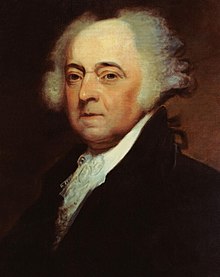 Except. Except as dead white guy John Adams wrote in his letter to the officers of the First Brigade of the Third Division of the Militia of Massachusetts, “Our Constitution was made only for a moral and religious people. It is wholly inadequate to the government of any other.”
Zealots often use that quote for religious purposes but I see the rest of the words. Mr. Adams believed that the U.S. Constitution was inadequate to govern the immoral.
The world is full of politicians like Professor Seidman who seduce us with promises of loose morals and anarchy.
The danger was summed up by an Egyptian protester yesterday: “the president must resign and a new constitution must be written” to replace the Morsi sham. Egypt’s current Sharia-based document replaced the 1971 Mubarek charter.
If we are to take back our own country, we have to start making decisions for ourselves, and stop deferring to an ancient and outdated document,” Professor Seidman said.
Alrighty then. No more irrelevant dead white guys.
All you Muslims, listen up. The Koran is no longer your law. All you Englishmen, listen up. The Magna Carta is null and void. All you African Americans, listen up. Professor Seidman has retracted the Emancipation Proclamation.
“Democracy depends upon its people not acting out of blatant self interest,” Glenn Peacock wrote on the Internoodle recently.
“We are doomed,” Rufus said.
Perhaps not. Maybe Professor Seidman’s talk was simply a Saturday Night Live skit that got to the wrong network.