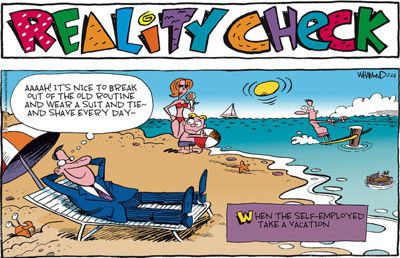
 Thanks, Dave Whamond
Not Quite Wordless Wednesday
Thanks, Dave Whamond Thanks, Dave Whamond
I almost managed to ignore an online quiz the other day:
What’s your favorite kind of popcorn when youre at home watching movies?
- Butter
- Healthy-style
- Salty
- I don’t eat popcorn
Who doesn’t eat popcorn?
And why do you have to be watching a movie?
We need a replacement for the microwave popcorn popper the Posts gave us as a Christmas present (not a wedding present as I had remembered) a few decades ago. It worked perfectly. The bowl shape allowed the kernels to explode from a well at the bottom but kept the unpopped ones in that concentrated area for best heating. Pretty much every kernel popped and rarely did any burn. Sadly, it cracked up the side and around the edges and ended up spilling more fluffy, white, popped goodness inside the oven than inside our tummies.
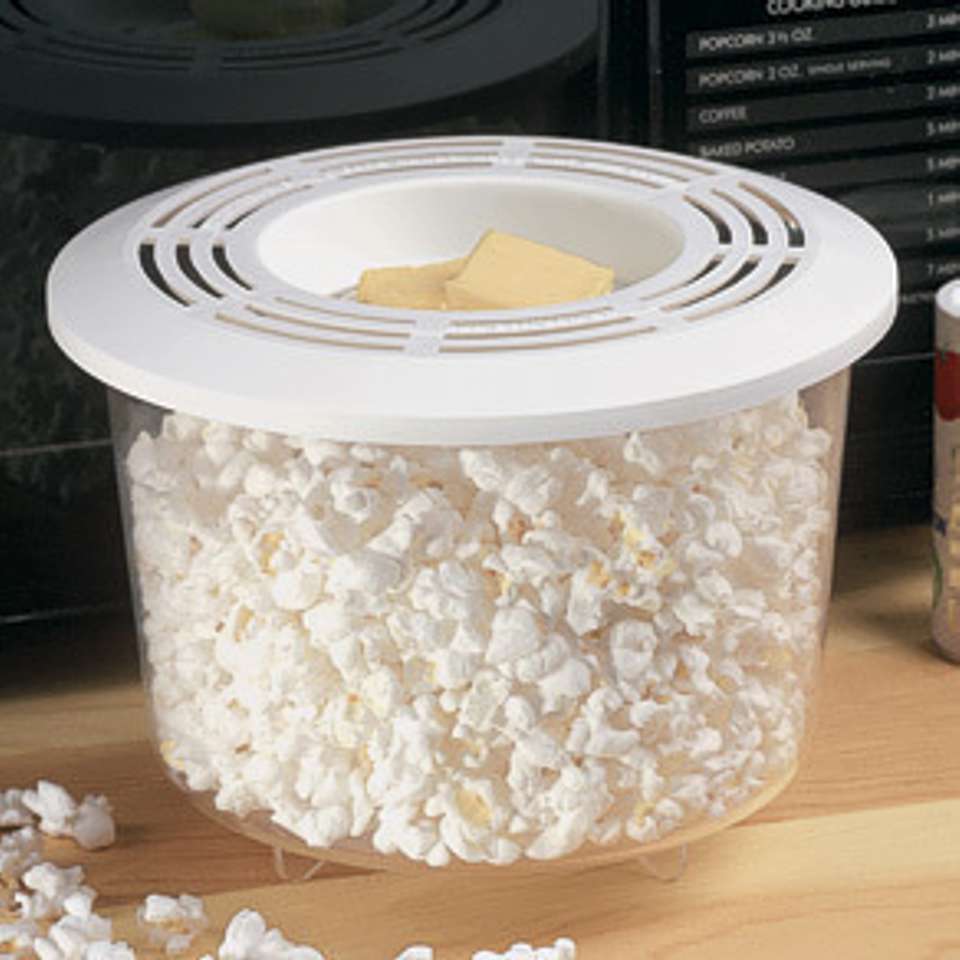 I think air popping is the best way to explode corn kernels; it doesn’t add oil and it doesn’t toughen them the way a microwave can. That said, I prefer microwave popping anyway because it requires the least clean up. I definitely do not prefer the overpriced single-serving bags1.
Woolworth’s was still in business back when they bought that popper; they probably paid about $1.99 but it may have been as much as six or seven bucks. I figure that translates to no more than ten bucks in today’s non-inflationary economy.
Inflation is such an important word. A kernel of corn has three essential components, the outer hull, the endosperm which is starch and water, and the embryo.
The water in a popcorn kernel plays the crucial part in the popping process. When we heat the kernel to about 400°F, the water found inside hull along with the starchy endosperm turns into steam which expands it to about 40 or 50 times its original size. All that steam pressure inflates the hard starch in the endosperm which, in turn, makes the hull pop (it actually flips inside out to allow the steam to escape). Microwave ovens are better at heating water than almost any other kitchen tool.
Google is my friend. Some of the time.
I found what, by illustration, looks exactly like the Posty Popper. And at $4.95 (plus shipping and handling) it was such a deal I bought two, one for North Puffin and one for South.
You can spend a lot more than ten bucks on a gourmet popper, even a simple plastic one, so I doubt if this plastic bowl rises to that level.
In fact, it is a disappointment. The first batch burned in about 20 seconds of popping. The second batch, half the size of the first, lasted a little longer before the flames appeared.
I searched again and found an “Amish Country Popcorn Microwave Popcorn Bowl.” Ten bucks. The description calls this microwave bowl “a great alternative to ‘the bag’! The bowl and lid are dishwasher safe.
Huh.
Odd to think that the Amish might have microwaves and dishwashers.
I stocked up on sandwich bags. I haven’t burned any of them down yet.
1A one-pound bag of do-it-yourself popcorn in the grocery store here — good for about 10 “individual” Dunning-sized servings — costs a couple-three bucks; paper sandwich bags add another three cents each to the cost.

 The Post Office is going to sue Lance Armstrong for running “the most sophisticated, professionalized, and successful doping program” that the world has ever seen which apparently hurts postal customers’ essential concept of the Post Office.
Yeah, I’d hate ever to think the Post Office might have the most sophisticated, professionalized, and successful program for anything. That would definitely give us the wrong idea about the Post Office.
The Postal’s Services own studies show that the service benefitted tremendously from its sponsorship — benefits totaling more than $100 million in sales.
Speaking of sophisticated, professionalized, and successful doping programs: Sequestration? Budget cuts?
I’ve been looking for a straight answer on how much will be cut from actual Federal spending this week. Best I can tell, the boogeyman will slice about $85 billion from the federal budget. And also, best as I can tell, total Federal spending for fiscal year 2012 reached $3.6 trillion and is due to rise for fiscal 2013. What do you bet the increase will be more than $85 billion? For the record, fiscal year 2012 marked the fourth consecutive year of trillion dollar deficits.
Here’s the problem in a nutshell: everyone is afraid that their personal ox will get gored.
Wow. That never happens in business.
Texas Instruments laid off 1,700 people. NBC dumped 500. Solel fired 140 of their remaining 430 workers. Xerox restructured 2,500 current employees into former employees. Stryker closed their facility in New York and plans to counter the medical device tax in Obamacare by slashing 1,170 jobs, some 5% of their global workforce. And those were just some of the announcements last November alone.
Nobody said boo when Citigroup slashed 11,000 jobs, when Dow “retired” Rufus, or when Motorola did the same for Liz Arden, but the Feds can’t handle a 2% cut in money they haven’t even spent yet?
Yesterday, Governor Martin O’Malley (D-MD) said, “We can’t cut our way to prosperity.” Perhaps not, but the stock market is up on news of the layoffs and faith in government is down on news of higher spending.
As Gail Collins wrote in the NYTimes, “Did you know one of the most popular TV shows in Norway was about firewood? Maybe you should have this discussion with a Norwegian.” Better yet, maybe we should have this discussion in Norwegian.
Today is the 100th anniversary of the certification of the 16th Amendment to the United States Constitution.
The Congress shall have power to lay and collect taxes on incomes, from whatever source derived, without apportionment among the several States, and without regard to any census or enumeration.
From ourdocuments.gov: “In 1909 progressives in Congress again attached a provision for an income tax to a tariff bill. Conservatives, hoping to kill the idea for good, proposed a constitutional amendment enacting such a tax; they believed an amendment would never received ratification by three-fourths of the states. Much to their surprise, the amendment was ratified by one state legislature after another, and on February 25, 1913, with the certification by Secretary of State Philander C. Knox, the 16th amendment took effect. Yet in 1913, due to generous exemptions and deductions, less than 1 percent of the population paid income taxes at the rate of only 1 percent of net income.”
My, how things have changed.