A (Baker’s) Dozen Reasons to be Left

As Paul Dirac almost said, In science one tries to tell people, in such a way as to be understood by everyone, something that no one ever knew before. But in political science, it’s the exact opposite.

“So-called ‘Liberals’ want to shove their one true enlightenment down your throat and mine,” Rufus told me.

I can’t speak for the Left so I asked my friend Fanny Guay to feed me the dozen or so most important concepts in her ideological world. I’ve known Ms. Guay for nearly 50 years. I can say that not because I’m far enough away to drop the age word safely but because she is proud of her experiential learning. She was a second generation member of Helen and Scott Nearing’s back-to-the-land movement in Vermont. The Nearings bought an old farm house and built a simple, self-sufficient lifestyle here, far from big government and rampant consumerism. Their descendants are now the power brokers and consumers of Montpelier.

“I will, as long as I can be earnest in my comments,” she said.

Sure. And I’ll be frank in my response. So here we go. Ms. Guay will supply the definitions. I’ll translate back into English as we go.

Today’s liberalism developed in large part from the progressive thinking, she wrote. We hold that the state must supply needy individuals with their most basic needs if they are unable to fend for themselves. We created the policies of government intervention in the economy, the creation of social welfare, the safeguarding of science, and protection of human rights. We teach that in the schools, implement it in the courts and in war, and guide and finance it through taxation. Some of our ideas were first incorporated in the New Deal.

Translation: American Liberals rejected the Divine Right of Kings in favor of the Divine Right of the State.


1. Mores, the law, and even the constitution are “alive.”

Translation: There are no absolute facts, only what our common agreement proclaims as truth. In other words, the end justifies the means.

2. People are inherently good but when they go astray, we can change them back by reasoning with them.

Translation: Laura Silsby, Mahmoud Imadinnerjacket, and even Glenn Beck, listen to reason and will change whenever the reasoning is liberal.

3. People are inherently good but when they go astray and reason doesn’t work, we can change them back with legislation.

Translation: If you fall from the path of true belief, we will tax you until you return. If that doesn’t work, we will regulate you back. If that doesn’t work, we will jail you.

4. The best way to help the poor is to tax those who can afford it. It counters all understanding that anyone could think otherwise.

Translation: We need to give away our financial future and our means of productivity. We will take fish from the fishermen to give to those who do not fish instead of teaching those who do not fish how to fish for themselves.

5. We need to pay more taxes to afford to lift our neighbors up by their bootstraps.

Translation. YOU don’t pay enough taxes to fund all the things I want to spend money on.

6. We value holistic education and assure that every child in school is treated well and passes every grade with his or her peers.

Translation: Today’s “educators” promote empathy over science because feelings are more important than the data that shows American schoolchildren are falling behind in every international measure.

7. Because we give everyone’s opinion equal weight, we are the most culturally advanced.

Translation: Our fellow travelers are always right because we can change our ways to accommodate their point of view; anyone who disagrees with us is at best misguided and at worst a threat to our way of life.

8. I do not believe we have enemies. We have people who do not trust us. We just need to learn everyone’s point of view to find why they do not trust us.

Translation: We could be wrong and, since they hate us they must have a reason. Perhaps we should change our ways to accommodate their point of view.

9. We must stop trying to bully the world to force everyone else to adopt our way of life.

Translation: The fact that we developed public education, built the world economy, support the world with our farms, perfected “labor saving” tools, and put a man on the moon is a bad thing and we must apologize for all of it. The Apologetic President, Mr Obama apologized to the Special Olympics, apologized to the Muslims, apologized to the Cambridge police officer, apologized to the UN, apologized to Europe, apologized to “Sin City,” all to make up for those transgressions. He apologizes in a major speech about once a month.

10. I do not trust our doctors and scientists to get important health issues like vaccinations right.

Translation: I completely trust all the doctors and scientists who match our common perception but not the ones who contradict my deeply rooted beliefs.

11. We are the world stewards. For example, we know that we have to fix Global Climate Change in our lifetime or our planet will be ruined.

Translation: Once upon a time, we called it Global Warming. Since the political scientists (the very same scientists who determined that Carbon Dioxide threatens human health and welfare and are always right) changed the name, no right-thinking Far Greenie calls it “Global Warming” anymore.

12. Our government moves fast, eliminates waste, and wipes out fraud.

Right. Translation: With our guys in charge, government will never again be so slow, wasteful, and criminal as it was with the other guys in charge. [Editorial note: There has never been a candidate who didn’t promise to root out sloth, waste, and chicanery nor a politician who didn’t see them rise on his watch.]

13. All knowledge should be free.

Translation: We must give away our country’s hard-earned intellectual property.


Ronald Reagan said, “The trouble with our liberal friends is not that they’re ignorant; it’s just that they know so much that isn’t so.” That and the fact that they haven’t yet been mugged by the reality that, sooner or later, Other People’s Money runs out.
Fix ‘R Right Up

Missy and Biff spent a couple of days with us last week. They drove up from North Carolina in Missy’s prized 1993 Cadillac Allante, one of the last to roll off the world’s longest assembly line.

The Allante was Cadillac’s first try at building ultra-luxury roadsters in decades. Pininfarina designed and built the bodywork in Italy. GM loaded the completed bodies, 56 at a time, into 747s for the 3,300 mile trip to Hamtramck, Michigan, for final assembly. In the end they built only about 3,000 of the cars each year. Missy’s has the potent Northstar V8, “road sensing” suspension, and vastly better brakes. Unlike the earlier models, it handles reasonably well in addition to being easy on the eyes.

We all went honky tonking in upstate New York on what should have been their last night here. Missy and Biff had driven up so we could all attend a friend’s sixtieth birthday party across the Lake, a fund raiser for a good cause, in a Grange Hall out back of beyond. Our friend has built a life around music so there were great bands and lots of impromptu music making.

We caravanned over. Upstate New York has some towns that even Google Earth has never found. We had to drive on back roads, the Northway, more back roads, over a snowmobile bridge, and through a couple of fields to get to the Grange Hall. Plowboy Willie Lindner was there, doing the mashed potato on the dance floor, and everyone had brought a dish to share. Many of the folks who came to sing and dance are vegetarians. Many of the entrees were beans, the musical fruit.

We drove back to North Puffin after the party; Missy and Biff grabbed a motel room and expected to drive South the next day. They awoke to find a pool of green anti-freeze melting the snow around the Allante.

Triple A towed them to the Bubba Brothers’ Garage.

The Bubbarage had been an upstate institution for three generations. Started by George and Sam Bubba when they mustered out in 1946, the two-bay garage built a strong following among returning vets and hot rodders. They added two bays when George’s sons joined them. The “boys,” George Junior and Billy Paul, brought the four bay into the computer age and sent Junior’s kids to ASE classes. The youngest Bubbas, George III (known as “G”) and Bobby Sam are both ASE certified Master Techs; they learned hot rodding from Grampa George and tractor repair from the farmers down the street. Best shop upstate.

New York Assemblyman Vinnie Alonso (D-Lehman Brothers) finessed the Motor Automotive Fixed Inspection Access Retirement Fund Act of 2009 through the state legislature. The Act required that all state inspection licensees and the associated repair facilities accept state-redistributed TARP money to assure each operation had sufficient capital to maintain vehicle safety and to bring the stations up to state standards. The new law also mandated that the state take a majority position in each station or that each station be held by an approved owner as designated by the legislation. The current Bubba Brothers wanted no part of that so their family garage changed hands (to Mr. Alonso) last fall.

Here is Missy’s note about what came next.

“The tow truck guy didn’t know the garage had changed hands, so he was praising these guys to the roof. I should have known something was really wrong when a one-eyed mechanic showed us to this broken down camper-trailer he used for a waiting room.

“About three hours after we got there, Mr. Alonso came out wiping his hands on a greasy shop rag. I found out later that he used the rag the same way that woman uses flour in the Rice Krispy Treats commercial. He never actually looked at a car. Anyway, he said it surely looked like we had a cracked block and we’d have to replace the engine.

“‘I can give you a good deal on a nice Chevy engine,’ he told us. ‘Probably have it in the car and running by Thursday.’

“Biff had popped the hood at the motel. He wiggled the water pump shaft and saw that the pump housing was cracked. He told Mr. Alonso to check that first. Mr. Alonso wrung out his shop rag and disappeared for three more hours. We were looking at another night in the motel and were about to call you to come get us.”

‘I think you may be right about the water pump.’ Mr. Alonso said when he came back. ‘I’m not sure exactly what kind of car it is, ma’am, so I just don’t know how long it will take to get the parts.’

“We told him it was a Cadillac.”

‘That’s American, right? Good. I have a friend with a junkyard up the road a piece. Maybe he’ll have the parts.’

I called the Bubba household for some insight into the story. Fortunately, they still did a little shade tree work so they were able to have the AAA truck bring them the Allante. The Cadillac dealer had a pump in stock; they got Missy and Biff on the road a couple of hours later. Their total bill was less than $400 including welding the motor mount Mr. Alonso’s wife’s nephew had broken disassembling the water pump.

“That weasel Vinnie Alonso’s a politician, ya know. Doesn’t even know how to fill his own gas tank. There must be a moral in this story somewhere, doncha think?” G. Bubba asked me.

Who Put These Guys In Charge?

Last March, Time Magazine noticed that, “Over the past few weeks, the U.S. newspaper industry has entered a new period of decline.” Past few weeks? Anyway, Time reported on 10 major metro dailies that are gone or going. Meanwhile, even the New York Times has dumped hundreds of jobs as employment at newspapers keeps reaching new lows.

Obviously, nobody reads newspapers anymore.

Except I do. As do 44 million other Americans every day.

I wrote op-ed columns for the Burlington Free Press back when Dan Costello was Editorial Page Editor. We also subscribed to that paper for years and I read it regularly. We stopped subscribing, though, not because they stopped publishing but rather because they stopped delivering. They kept billing us, though.

That seemed like a poor business model to support.

The Freep certainly wants my business back. Or someone’s. They used the U.S. Postal Service last fall to mail a beautiful 4-color tri-fold on legal size card stock to “R Harper or anyone else more-or-less breathing at” my North Puffin address. The flier offered 52 weeks of Sunday newspapers delivered for just $22. That’s less than they pay the carrier. [Editorial note: that may not be true. It is true that they tack more than $22 on to subscriber bills for motor route delivery.]

But wait! There’s more! Sign up now and get the Thursday and Friday papers as well!

All for just $22.

The promotion worked.

I was in South Puffin when the flier arrived, so I waited until just before Christmas to take them up on it. I mailed them a check a month ago. I didn’t include an email address on the registration form, but they emailed me at my most private address a couple of weeks ago anyway.

Thank you for subscribing to The Burlington Free Press.

You will receive your newspaper 3 days a week. We’re sure you’ll enjoy everything we have to offer.

And they cashed the check.

The Christmas offer I took advantage of expired 12/27/09. I just received a new one in the mail with the same pitch. The new offer mailed this, the first month of 2010, expired 12/27/09, too.

A month has passed. I looked for the paper religiously every Sunday. OK, I skipped 1/3/10 since we weren’t here but I looked on the 10th, the 17th, and again yesterday. Between the first of the year and today, I figure that makes about 11 newspapers. That makes quite a pile of fish wrap. Or fire starting material. I tried the link to my account they sent in the confirmation email. There was no login button anywhere on that page, on the “contact us” page, or even on the front page of burlingtonfreepress.com. I called their 800 number.

“I show that service started on the 21st,” the Customer Service rep said.

Of this month?

“I’ll send a note to the carrier, Mr. Harper,” she promised. “Let me check the details of your order.” She confirmed my street address, phone number, and zip code and asked me to sign up for automatic billing. I declined. When she read off my very private email address, I asked her to remove it from the system.

“I can do that,” she said.

I reminded her that we hadn’t had a roadside newspaper delivery “tube” since the firebombing incident.

“Do you want me to request a tube?” she asked.

No, I think it would be more productive to schedule an air drop down my chimney.

We both hung up. I puttered a bit. And the computer announced, “Sweetheart, you’ve got mail.” The computer has a little bit of a lisp and sounds remarkably like Humphrey Bogart.

Thank you for notifying us that you did not receive delivery of your newspaper on Thu, Jan 21, 2010, Fri, Jan 22, 2010, and Sun, Jan 24, 2010. We have notified your carrier to ensure proper delivery in the future. Your account has been credited for the missed delivery.

The email came to my very private email address, the one that Customer Service assured us is no longer in the system.

A month has passed since I placed the order. I used to wonder why people think newspapers are failing. I haven’t received a paper. I don’t wonder anymore.

Maybe Yes, Maybe No

Are “Big D” Demorats capable of answering a direct question? My friend Rufus thinks the answer is a resounding “No!” Today’s 800 words are dedicated to trying to get a one word answer.

I posed a question on Facebook over the weekend: do you think businesses should make their customers absorb the taxes those businesses pay? Yes or No?

Here’s the back story. President Obama now plans to crank up the tax on banks. The Star-Ledger , an actual newspaper in New Jersey, reports that the sharp increase in the taxes paid by the nation’s largest banks will raise $90 billion or so. Demorats just love these regressive taxes: sales taxes, taxes on hospitals, fees on dollar stores.

Wikipedia defines a regressive tax as one that “imposes a greater burden (relative to resources) on the poor than on the rich — there is an inverse relationship between the tax rate and the taxpayer’s ability to pay as measured by assets, consumption, or income.”

Put more simply, pretty much everyone who deals with a big bank will see their fees go up a buck or two per month in response to the tax. If your income is $500 per month, a buck or two could make the difference between getting that $4 generic prescription or not. If your income is $50,000 per month, a buck or two won’t make difference in getting that $15 Viagra™.

Former North Puffin car dealer Buster Door and Democratic party official took up the challenge.

“Learn the difference between tax policy and a business model,” he replied.

It was a yes or no question, Buster.

Singer Jimmy Buffett had a thought or two about ducking these difficult queries:

Some say life isn’t fair,
Hey, I don’t know, I don’t care.

Ambivalent, well, yes and no.
Hey where did all the hippies go?
Our conversation sounds like actors’ lines.
Is it time for your medication or mine?…

If you’re looking for a quote from me
I’ll be under the mango tree.
Just can’t say how I’ll get there
Hey, I don’t know and I don’t care.

I love the liberal approach: when faced with facts, obfuscate, deny, point to someone else as the problem, and leave.

Tell us, Buster, I asked, do you think businesses should make their customers absorb the taxes those businesses pay? Yes or No.

“We raised prices when doing so made sense in the context of our business plan…” he replied.

Ignoring the fact that pricing goes in a marketing plan (not a business plan), that is perhaps the best obfuscation printed in politics this week. In fact, I’m sure I’ve heard a similar phrase come out of Washington: “We would never raise taxes unless doing so made sense in the context of the growth of revenue in the private sector …”

Huh? It was a yes or no question.

Tell us, Buster, I asked again, do you think businesses should make their customers absorb the taxes those businesses pay? Yes or No.

“Typical binary wingnut thinking: YES or NO?” he answered. “I think that businesses decide, on a case by case basis, which costs to absorb and which to pass on.”

I wrote, “Tell us, Buster, do you think businesses should make their customers absorb the taxes those businesses pay? Yes or No?” That asked for a 1 word answer. Buster wrote another 100 words. Businesses do indeed make their own decisions but he never answered the question.

Tell us, Buster, do you think businesses should make their customers absorb the TAXES those businesses pay? Yes or No?

“Are you really having trouble reading and comprehending the statements, ‘Taxes are a cost, Dick. Like all other costs, they are absorbed or passed along on a case-by-case basis.’? Or are you just wallowing in some bizarre thread-length bit of ego-boo?”

You’re right, Buster, this thread is not about taxes; it’s all about me and my ego. When asked for a one-word answer (YES or NO in case anyone forgot), Buster delivered dozens and dozens more words and still didn’t answer the question.

Buster crawled down the presidential “It depends on what the meaning of the word ‘is’ is” rabbit hole with his final response to the question: “What’s the square root of pi, Dick? YES or NO?”

“Pretty typical, innit,” Rufus commented.

I wouldn’t dream of putting words in Buster’s mouth but methinks the gentleman doth protest too much. You, gentle reader, could conclude that, in answer to the question of whether businesses should pass new taxes along to their customers, Buster would give a resounding “No!” Which begs the question of whom he thinks will pay the new tax?

After all, when Buster crawls under the mango tree, I simply can’t help but hear the echoes of Ronald Reagan: The trouble with our liberal friends is not that they’re ignorant; it’s just that they know so much that isn’t so.


Despite Buster’s liberal application of fancy footwork, banks aren’t the only businesses that quietly pass along taxes to consumers. Sirius XM added a $2 RIAA tax its monthly bills to pay the court-ordered “royalty” tax for listening to satellite radio. Customers of SECO, the Sumter Electric Cooperative in Hernando County, Florida, will see a $50 increase in their monthly electric bill when Congress passes Crap and Trade. Every phone bill has a line item for “Regulatory and Compliance Fee Recovery.” That’s phone company speak for baldly passing on a tax the government imposed on the business (it’s up about 50% since last year on my bill.)

And the banks themselves raised credit card interest rates and fees last month in anticipation of new laws forbidding higher credit card interest rates and fees.

The words quoted in this piece are real. Only the names have been changed to protect the dumbfounded.

This just in. Campaigning in Massachusetts President Obama said, “Bankers don’t need another vote in the United States Senate. They’ve got plenty.” I expect this tax to fail the same way bankers beat back the heavy Wall Street bonus tax. Of course, Congress can always raise the needed $90 billion by adding a tax to the three health care policies they haven’t exempted from new taxes. That would be your policy, Rufus’, and mine.

Put the ‘A’ back in SCC

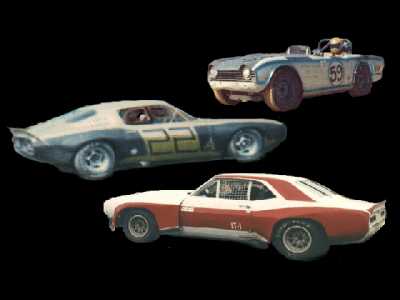
I took some time off from worrying about the claim that women’s hot flashes are responsible for Global Warming to reminisce about the years I raced “pony cars” in sports car races in the 1970s.

It is very hot in a race car cockpit.

Many think that the pony cars started life when Ford launched the Mustang — the nearly eponymous name came from the ‘Stang — in 1964 but the real start of the breed was the popular and sporty Corvair Monza from Chevrolet. The cars were (and are again) compact, stylish, affordable, and sporty.

The Sports Car Club of America (SCCA), first and foremost a sanctioning body for automobile racing, created amateur and professional racing classes for pony cars in 1966. Amateurs turned the cars out for trophies in “A-Sedan” while pros brought the same cars to the track for cash prizes in the fabled “Trans-Am” series. The rules were pretty simple then: tune the suspension, widen the steel body for a 64″ track, get really good brakes, install a roll cage, then jack up the Holley 4-barrel carburetor and pour a 5 Liter, 500 horsepower, engine under it. The cars looked like ones you could buy from the dealer down the street. Mostly.

The Trans-American Sedan Championship began as a manufacturers’ series for racing these pony cars. The original races were open to cars in SCCA’s A and B Sedan classes; The Over 2.0 Liter and Under 2.0 Liter cars ran in the same races. The original races that most fans remember included the AMC Javelin, Chevrolet Camaro, Dodge Challenger, Ford Mustang, Mercury Cougar, Plymouth Barracuda, and the Pontiac Firebird. Oldsmobile had no pony car. Mark Donohue won the championship in 1968 and 1969 driving Camaros for Roger Penske. He returned in 1971 to win in a Nash. As an aside, the Pontiac Trans Am was named after the series. The last time a Pontiac Trans Am won a Trans Am was in 1984; the model has won 7 of 446 events.

Back to me. I raced Camaros in the 1970s but SCCA “evolved” the classes out from under me.

“Put the A back in SCC” first referred to a grass roots campaign within the SCCA when the club dropped the A Sedan category in favor of lumping all the A Sedans together with the top two roadster categories to form the new class called GT-1. Camaros were a second or two a lap slower than the “production-class” Corvettes at a track like Lime Rock so SCCA also changed the way we built the cars. Although designed for the big Detroit iron, today’s Trans Am and GT-1 cars are front engine, rear wheel drive, tube framed cars with body work cleverly made to look like a street car. (As an aside, most are very, very similar to the NASCAR Nationwide short track race cars.)

We Luddite A-Sedan and Trans Am drivers didn’t much like the change. We asked SCCA to put the A (Sedan) back in their line-up. They did not although in 1995 the club did start the amateur-level American Sedan class for cars which is cross between Showroom Stock and the old A-Sedan.

The Trans-American Sedan Championship died in 2006 but has come back. In 2009, Jaguar won the championship in a car that doesn’t look remotely American. Other competing marques include Audi, deTomaso, and Porsche. The 2010 series will race at New Jersey, Mosport, Miller Motorsports Park, Lime Rock, Toronto, Brainerd, and Virginia International Raceway.

And that’s exactly where this history lesson is going.

The Trans-American Sedan Championship began as a manufacturers’ championship for American-made sedans. I’ve been looking at and test driving that new breed of sedans and I guarantee that the 2010 Chevrolet Camaros, Dodge Chargers and Challengers, and Ford Mustangs are faster, better handling street cars on street tires than my 1969 or 1971 full race Camaros.

Not only that, those cars look like real Trans Am cars should look.

I think it’s time again to put the A back in SCC as well as in Trans Am. This time, though, let’s make it a series for American sporty cars. It is time to celebrate just how good American cars can be.