The Unaffordable Care Act, Part 739

USA Today found that “Many of next year’s premium rate increases on the Affordable Care Act exchanges threaten to surpass the high and wildly fluctuating rates that characterized the individual insurance market before the health law took effect.”

I told you so. My liberal friends hoped against hope that I was wrong. Deep down, you may have known this moment would come. I really did.

Politico reports that “Obamacare has turned into a financial sinkhole.

“UnitedHealth Group, the nation’s largest insurance company, is pulling out of the Obamacare business in North Carolina next year,” they found. “Blue Cross Blue Shield of North Carolina, which dominated the individual market with more than a half-million customers, reported that losses on its Obamacare business in 2014 and 2015 topped $400 million. The insurer said that figure includes government payments designed to shield insurers from big losses during the early years of Obamacare.”

The simple formula of the Unaffordable Care Act sugars out thusly:
1. Build network around a large dominant group.
2. Force everyone into the system.
3. Ration care.
4. Raise prices.

Sounds a lot like cable television, doesn’t it?

Wotta surprise.

Here’s another surprise. Hillary Clinton says she will “defend the Unaffordable Care Act, build on its successes, and go even further to reduce costs.”

Anybody want to tell her that jacking your premium by hundreds of dollars per month ain’t reducing costs? I don’t think she’ll listen to me.

 

Sum Oblitus

I told SWMBO yesterday, “I’ll write about a new Alzheimer’s drug test on an old, old drug on the Ides of August.” If I remember.

As an aside, Shakespear taught us that the Scottish king Duncan died on this day in 1040, and the namesake of the Scottish play died exactly 17 years in 1057. That has absolutely nothing to do with mice nor men nor memory other than the fact that I am very glad to have remembered it.

Memory is not easy for some of us as we age.

According to the Alzheimer’s Association, Alzheimer’s is the most common form of dementia, a general term for memory loss and other intellectual abilities serious enough to interfere with daily life. Alzheimer’s disease accounts for 60 to 80 percent of dementia cases. It’s a progressive disease, where dementia symptoms gradually worsen over a number of years. In its early stages, memory loss is mild, but with late-stage Alzheimer’s, individuals lose the ability to carry on a conversation and respond to their environment. Alzheimer’s is the sixth leading cause of death in the United States. Those with Alzheimer’s live an average of eight years after their symptoms become noticeable to others, but survival can range from four to 20 years, depending on age and other health conditions.

It’s not just our memories it kills. It kills us. The advanced dementia impairs immune function and causes an inability to ambulate as well as incontinence and aspiration so many individuals with advanced AD contract deadly “intercurrent infections,” usually pneumonia.

Alzheimer’s Research Finds an Old, Old NSAID Reverses Memory Problems in Mice

Mouse with a Pill Researchers at the University of Manchester have found that giving mice mefenamic acid totally reverses memory loss within a month. Their data suggests that the fenamate non-steroidal anti-inflammatory drugs (NSAIDs) could be relabelled as Alzheimer’s Disease therapeutics. They published the study in the journal Nature Communications last week.

Scientists at Parke-Davis invented mefenamic acid in 1961. The U.S. patent was issued in 1964. The drug is long since generic and is available worldwide under many brand names including “Ponstel.” Doctors generally use it to treat moderate pain and it is well tolerated for post-surgical pain but it is not widely prescribed.

Oh. One might think that a widely available generic drug would be affordable!

According to goodRX.com, a month’s worth of brand-name Ponstel sells for $819.57 at Walgreens and $777.26 at Rite-Aid but the generic sells for $203.72 at Walgreens and $216.45 at Rite-Aid. With a coupon. Wikipedia reports that, in the USA, wholesale price of a week’s supply of generic mefenamic acid was quoted as $426.90 in 2014. Ponstel cost $571.70. In contrast, in the UK, a week’s supply is £1.66, or £8.17 for the branded Ponstan. In the Philippines, 10 tablets of 500 mg generic mefenamic acid cost PHP39.00 (or the equivalent of $0.88USD) as of October 25, 2014.

And therein lies the rub. Mefenamic acid costs practically nothing to manufacture but price gouging here means that, if it does prove out as an Alzheimer’s drug, we won’t be able to afford it.

I think we should march on Washington about this pricing. We’ll meet a million-strong at the National Mall on Tuesday at noon. If we remember.


New Tricks

Food for thought…

Yes, you can.

I grew up on Skippy Peanut Butter and Kraft Mayonnaise.

No, not in the same sandwich although I am partial to peanut butter and raisins.

Anyway, I like mayonnaise and use it on things that need it, like eggs and chicken and tuna and in cole slaw dressing. And it can get the gum out of your hair. Not Miracle Whip, though. Never Miracle Whip. Eeeew.

Miracle Whip tastes funny and is probably evil.

My neighbors cleaned out their fridge into mine when they headed north. One of the bonus materials is an open jar of Miracle Whip.

Hmm. I’m out of mayo and here’s this free jar of the spawn of the devil.

Turns out one can make a darned good chicken sandwich on sourdough with a little mouse cheese, a slice of tomato, and Miracle Whip.


Yes, you can.

I’ve long thought Debbie Wasserman Schultz (D-FL) was pretty typical of our more than slightly bent South Florida politicians and about the best the Democratic National Committee could find as party chair. After all, even the liberal stalwart Politifact rated her public pronouncements as ranging from half truths to having her pants on fire more than half the time.

Slice, dice, and spread on bread.

Turns out one can make a darned good career just whipping up a Miracle. It’s a good recipe for Ms. Clinton who put Ms. Wasserman Schultz on staff.


Yes, you can.

“I had made some carnitas so I had that with corn tortillas and a little salad for supper,” Liz Arden told me last night. Literally “little meats,” this pulled pork-style dish originated in Mexico. Carnitas “are made by braising or simmering pork in oil or preferably lard until tender. The process takes three to four hours and the result is very tender and juicy meat, which is then typically served with chopped coriander leaves and diced onion, salsa, guacamole, tortillas, and refried beans.” Some recipes add a little lime juice and I like to add Key lime.

I thought she didn’t like cilantro?

We served turkey-and-“cheese” sandwiches with mayo at the concert last night. That was a mistake. Not the mayo; that was fine. Processed cheese is a food product made from cheese and, more than likely, other unfermented dairy by-products plus emulsifiers, vegetable oils, salt, food colorings, and more. Store brand “Singles” may well leave out the cheese and anything else that came from a cow. The package I bought tasted like it had some cow by-products, just ones that came from the wrong end of the cow.

Turns out one can make a darned good turkey and cheese sammie. I’ll peel the “singles” out and put real cheese in the remainder before I eat another, you betcha.

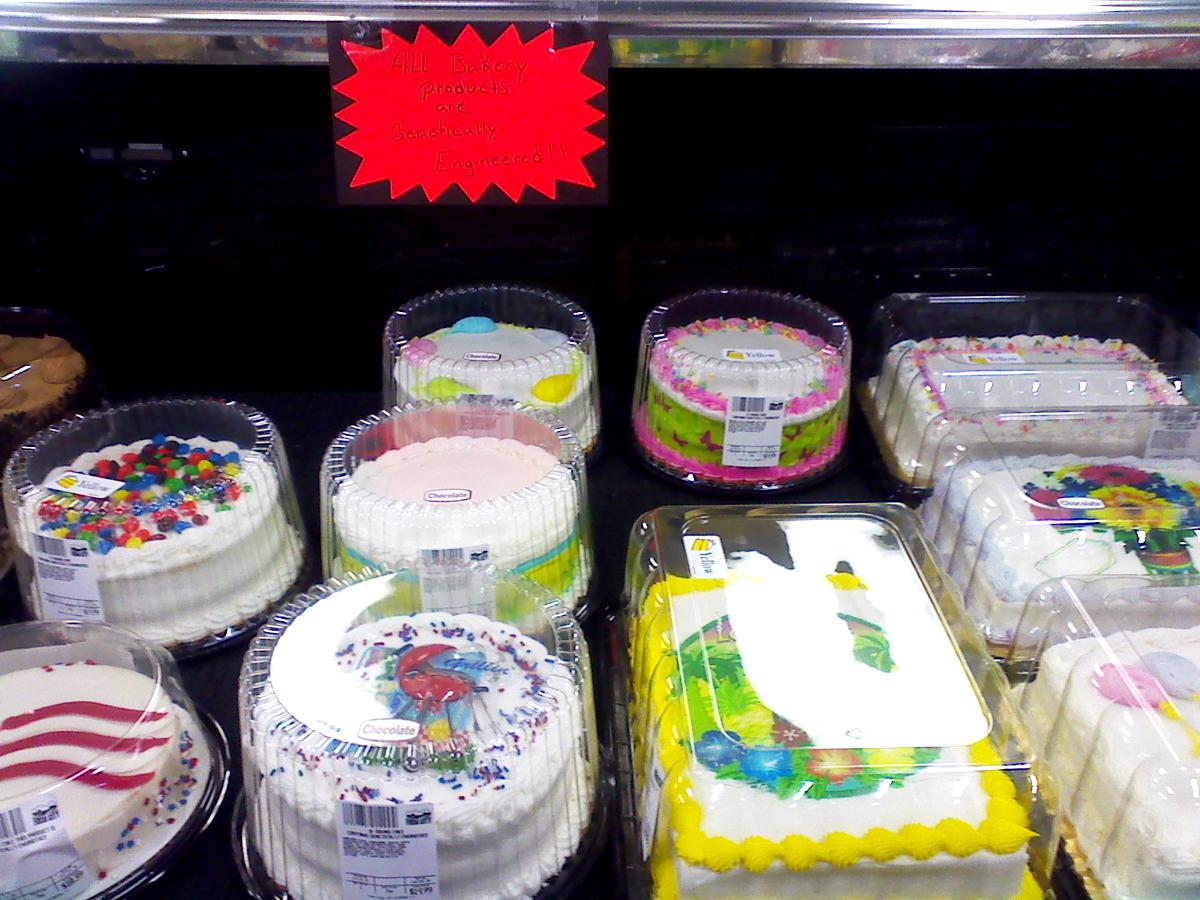
Fortunately, we had good cake.