
Mail It

Tales of a South Puffin headed North.

We’re south of South Florida and actually more comfy year round than the mainland (it’s sub-tropical down there in the Keys, so we do get a bit of temperature swing but it’s small).

I’m a sunbird. I stay there until the ocean gets warmer than the air, and then follow the cool air to North Puffin. I’ll be back before I have to start wearing longjohns and cutting a hole in the ice for supper up there. That’s a reference to ice fishing although I have never understood why people would spend a day sitting on a bucket to try to catch a block of ice. I mean Walgreens or Kinneys sells ice for a buck or two.

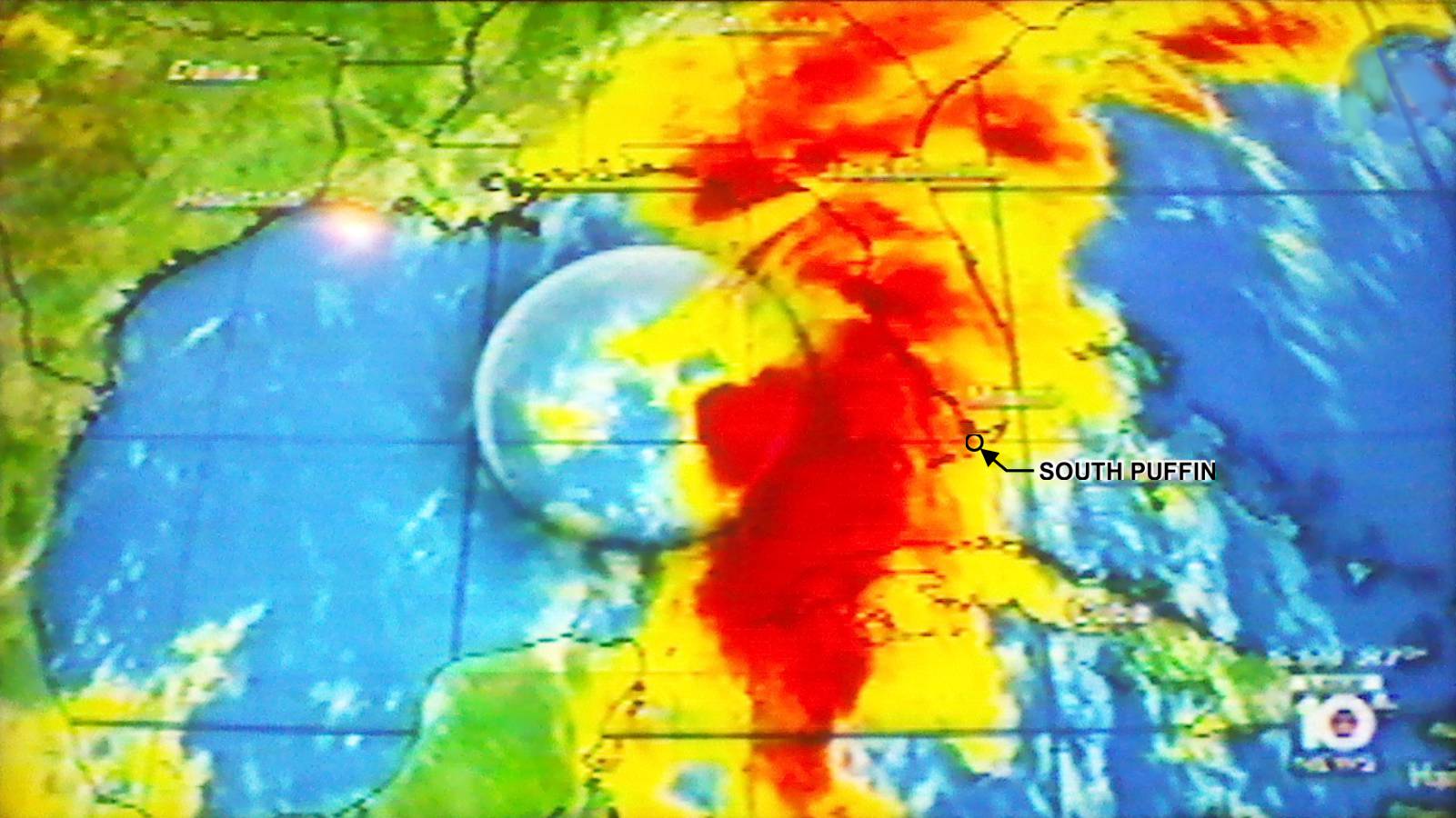
Today is the first day of Summer but my last day down south last week felt like summer. It was sunny, sunny, sunny and calm with a high of 91 or so which meant a heat index of about 108. The water temp was 90F at Station VCAF1 — Vaca Key — which is off Palm Island Drive on the Gulf side of Marathon. It certainly felt like bath water in the ocean. The “cold spots” were probably 85.

As an aside, 2016 is a very special year because the solstice coincides with the “Strawberry Moon.” Named by early American tribes, the Strawberry Moon is a full moon like any other, but the one that marks the beginning of the strawberry season. The two events coincide once every 70 years. It may be pink when I get the picture.

I have several chores to do when shutting down the house. Tell the cops. Turn in my !@#$%^Comcast devices (the high point of the day, you betcha), and (temporarily) forward the mail.

I generally did the latter at the counter, but the Post Office got all official-like and started making me fill out a form and mail it in. Last year, I actually handed it to our postal person, but the USPS probably charged itself for the “postage paid” response card.

Our postal person was up to his eyeballs in customers when I went in for the form so rather than waiting in line, I decided to do it online. It’s easy peasy. Go to “USPS.com. Find ‘Change of Address’ under ‘Quick Tools.’ Follow easy on-screen instructions to enter to enter your information.” And the easy on-screen instructions really were easy.

Until I got to the Identity Verification.

Identity Verification — Credit/Debit Card

We must charge your credit/debit card $1

In order to verify your identity, we process a fee to your credit/debit card. The card’s billing address should match either the old or new address entered on the address entry page. If your card is billed to a different address, you may enter it by selecting the “Enter a different address” option. This is to prevent fraudulent Change of Address requests.

Please note that the Internet Change of Address Service uses a high level of security on a secure server.

Wait a minute. What?

You charge a dollar to verify my identity? What, are you nutz?

Banks, which charge for everything, have figured this out; they don’t charge.
Paypal knows how to do it; they don’t charge.
I think my stockbroker put four cents in my account.

I stopped at the counter on my way out of town. Our postmaster is on vacation but our sub gave me the form to fill out. I did it on the spot and handed it back.

“You know you can do this online, right?” she said.

“You charge me a dollar.”

“That’s an ID check because anyone could go online and change your mail.”

I just shook my head and handed her the form.

“I’ll take this but it takes at least two weeks to go through.”

By the way, she doesn’t know me from Art. Didn’t ask me for ID, though.

<le sigh>

 

Gouged

First, do no harm.

I met a fellow at the drug store counter the other day (we’ll call him “Bob” so he remains completely anonymous). Bob told me his insurance company denied renewing the 30 mg Prevacid™ prescription he’s taken for years. A little research shows that the FDA approved 15 mg Prevacid™ for Over-the-Counter sales. Bob thinks he can remind Aetna that “the FDA decided you still need an Rx for the 30 mg.”

Mortar and PestleBob is, as we say in Big Pharma, scrogged. Oh, he can buy and take two of the 15 mg pills and he will, in the short term, but that is exactly the same as taking the 30mg which the FDA says you need the prescription for.

“Someone got stupid or cute,” he added.

We’ve all heard of Martin Shkreli, even if we don’t remember his name. The then-new CEO of Turing Pharmaceuticals acquired rights to make Daraprim™, an HIV and cancer drug that has been on the market since 1953 (it is a sole-source medication for toxoplasmosis that is frequently used to treat a life-threatening parasitic infection in patients with compromised immune systems). Turing raised the price from $13.50 to $750 per pill; Sen. Bob Casey (D-PA) called that move “pure evil.” Mr. Shkreli was arrested in December on securities fraud charges.

The Burlington Free Press reports that Bob and Deborah Messing of Montpelier are in the same boat. “She’s on Orencia™ … for rheumatoid arthritis. He recently finished a course of Harvoni™ … to treat hepatitis C.

“Both drugs are expensive. Harvoni™ lists at $1,125 per pill, or $94,500 for a 12-week course of treatment. Orencia’s list price tops $3,000 a month.”

Meanwhile, tens of millions of Americans use beta-blockers to treat hypertension and other heart ailments. My grandmother died in 1953, after living as an invalid with high blood pressure for years. Daraprim™ wouldn’t have helped her but drugs like Inderal™ would have. If she could have afforderd it. Pronethalol™, the first ß adrenergic receptor antagonist, was introduced in 1962 to treat angina pectoris. Propranolol was launched under the trade name Inderal™ in 1965. Corgard™ (generic name: nadolol) came along a few years later. We call them beta-blockers.

Bob’s wife Jean takes nadolol every day and her blood pressure is well controlled. It’s one of those miracle drugs that was on the Walmart $4 list ($10 for a 90-day supply). Unfortunately, the price of generic nadolol skyrocketed after a supposed “shortage” in 2013 — it was actually cheaper to buy the branded Corgard™.

Found on the Interwebs: “This bull$%!# is the game the manufacturers and distributors play. They create a shortage then raise the price through the roof. This one is unforgivable. It’s an old drug and shouldn’t cost more then it used to.”

Drugs.com shows the current price for 90 tablets is $201.38 or $2.24 per pill. Intriguingly, their best price is $0.88 per pill for 30 tablets. “Prices are for cash paying customers only and are not valid with insurance plans.”

Jean called one of the generic nadolol manufacturers and was told there was absolutely no shortage. They didn’t explain the price hike, though.

I can.

Oh, there has been plenty of finger pointing. Pfizer, the world’s largest drug maker and the manufacturer of Corgard™, paid $68 billion for rival Wyeth back in 2009. Even with the Wyeth deal Pfizer has product, patent, and no-drugs-in-the-pipeline problems. “That cost isn’t it, though. It’s the distributors.” “Oh, no, the retailers did it.” “Not me! I barely make the rent.” “Medicare and Medicaid and the VA can’t negotiate better prices under federal law.” And so on. For the record, Pfizer’s Wyeth buyout led to massive R&D cuts and weak productivity. No wonder prices went up.

There’s a bigger issue.

I have no more idea what Corgard™ or Prevacid™ really costs Bob than I do what a quick appendectomy would set back my granddaughter. Neither does the doc who prescribes the drug or cuts on her tummy. And, “for people of the Messings’ modest income, big manufacturers’ discounts and state assistance make their costs manageable.”

See, we don’t actually pay for any of them ourselves. Except for Bob who got scrogged.

We’ve gone from trading our own hard-earned, multi-colored greenbacks (or a chicken) for medical care to trading a get-out-of-jail-free card for it.

I bought a truck. I knew exactly what it cost before I closed the deal.
I bought a television. I knew its price precisely before I clicked BUY.
I bought a pound of ground beef. I knew exactly what it cost because it was right there on the label.
On the other hand…
Our doc prescribed Keflex when SWMBO had a strep throat. “How much will this cost?” I asked. He had no idea. “Your insurance should cover it.”

Pharmacy CadeuceusWe have a fantasy that medical care is free, so no one pays attention to what it costs and that leaves the door open for the price of Corgard™ jumping by a factor of 20 and Daraprim by 55 times.
Last month, the Vermont state legislature passed S.216, a bill that requires drug companies to explain price increases. The bill has the state health board list just 15 prescription drugs with dramatic price increases and would require the drug companies “to provide justification for the increase in the price of the drug” to the state Attorney General.

35 states have made some forms of price-gouging a crime.

It’s a start.


Guest Post: Attacking the Judiciary

I just got an email from MoveOn.org, taking Judge Aaron Persky to task for giving Brock Allen a six month jail sentence in the Stanford rape case, and asking me to sign a petition demanding that the “Committee on Judicial Performance” remove the Judge Persky from the bench:

“Judge Aaron Persky’s failure to hold Brock Turner accountable for the rape and his dismissive comments at sentencing show that he cannot be trusted to dispense justice. He must be removed from the bench immediately.”

While anyone who wants to can post a petition on MoveOn’s website, I’m surprised that MoveOn has inserted themselves into this issue by actively promoting the petition.

The State of California Commission (not Committee) on Judicial Performance has authority only to investigate complaints of judicial misconduct. The petition not only fails to allege judicial misconduct, it fails to even allege judicial error

The petition’s allegation that the Judge failed to hold Brock Turner accountable is wrong on its face. Even the claim about “dismissive comments” is baseless–a casual reading of the Judge’s statements, as reported by legitimate media outlets, reflects his analysis of all the relevant factors as required by California sentencing guidelines.

It seems to come down to a bunch of people who’ve read social media posts on the case, and are outraged because… justice! (Beyond the petition at MoveOn, there’s one at Change.org calling for Judge Persky’s impeachment, and a website advocating his recall.)

What concerns me is that the people pushing for Judge Persky’s removal don’t consider the unintended consequences of that action. How is removing judges for rulings in abortion cases, LGBTQ civil rights cases, or tax cases any different from removing a judge for an unpopular ruling? If victim’s rights advocates can drive a social media campaign to remove a judge they don’t like, what’s to stop abortion foes, religious extremists, or billionaires from doing the same thing?

Over the last week or so, Donald Trump has been widely criticized for his racist attacks on Judge Curiel. Yet, is his demand that Curiel be removed from the Trump U case any different from social media demands that Persky be removed from the bench? Despite the former being blatantly driven by Trump’s personal self-interest, and the latter couched in cries for victim justice, they have the same goal: to subvert the judiciary.

The only important difference between the two is this: Trump’s attack on Judge Curiel has already failed, and backfired against him. The social media attack on Judge Persky may yet succeed, and result in long-term damaging consequences to our justice system.

Evan Yares