Labor Day? Really?

On this day named for Laborers on which we do not Work, it is worth noting that politicians do not create jobs, no matter what they say.

I think Congress should pass the President’s job package, the one he’s been talking about for weeks, the one he will announce and may even give one or two details for, on Thursday. After all, he promised!

Jay Carney, asked if Mr. Obama’s package would drop unemployment below 9%, said, “Based on, when you’re talking about economic predictions, yes. Economic analysts, economists will be able to look at this series of proposals and say that based on history, based on what we know, based on their collective expertise, that it would add to economic growth and cause an increase to job creation.”

Uh huh. Politicians do not create jobs.

Back when she was still boss in 2009, Nancy Pelosi (D – CA) wrote about the final G.R.A.F.T. Act, “This legislation will jumpstart our economy, create and save 3.5 million jobs.” She used the phrase “create jobs” or “create really really outstanding jobs” 41 times.

Uh huh. Politicians do not create jobs.

The site michigan.gov trumpeted that, “Thanks to Governor Granholm’s 21st Century Jobs Fund, this new economy is actually taking shape… The first round of awards has already provided funding to 67 companies and projects, creating thousands of jobs…”

Uh huh. Politicians do not create jobs.

Michigan is closer to the truth. Politicians give away OPM to businesses that create jobs. “OPM” is “Other People’s Money,” something politicians think they have an infinite supply of and that We the [Other] People know is running out.

It is Labor Day and 25 million Americans are still not laboring.

It is Labor Day and we are not laboring because 0 jobs were created last month. Zero. Nada. Zip. None.

It is Labor Day and we are not laboring. Politicians will create no jobs today, either, but they will walk in parades and pretend they have.

In 2009, the White House said President Obama’s stimulus plan would bring unemployment to below 8%.

Uh huh. Politicians do not create jobs.


This column first appeared on Monday, September 7, 2009. I have updated it slightly.
You might also enjoy last year’s Labor Day reminiscence, Milestones

Broke? Broke.

I should start this tale with some family lore. We were cruising the Bay sometime in the 1960s when we wanted to pass through the Kent Narrows drawbridge. The Kent Island Narrows waterway separates Kent Island from the Delmarva Peninsula (the “Eastern Shore”) and connects the Chester River with the Eastern Chesapeake Bay. We eased up toward the bridge and blew one long blast followed by one short blast, the marine horn signal that asks, Open the drawbridge, please. The bridge tender waved us off.

My dad raised his hands palms up in that universal “what gives?” query.

“Broke!” the bridge tender shouted.

“Broke?” my dad said.

“Broke.”

That has nothing to do with this story and everything to do with the title. The notes that follow are my text messages from this morning and afternoon with some amplification.

At hospital. Anne broke leg. More later.

It’s our friend the County Clerk’s fault. A couple of months ago, he invited Anne to work part time as a trial reporter but he called this morning to tell her not to come to work. The Court was closed.

Anne decided to pick apples. Her feet went out from under her on the slippery slope of our terrace and her left leg twisted way the wrong way. Fortunately, I was in the study and didn’t have the radio on, so I could hear her bellering.

She heard the bones break. She has experience in that. And looking at it, I had no doubt.

Broke. Not compound. Waiting for xray.

There was only one available room in the ER: the cardiac room. Our Son-in-Law knows it well because he’s the Death Investigator for the county.

After taking down a brief history, new NMC Emergency doc Suzanne Elliott did a fast exam and made sure there was no blood. Decided it was broken. Gave Anne Dilaudid IV push.

Number One Daughter and Son-in-Law arrived. All state offices are closed for the day which explains why the court was closed. Montpelier is under water. The state computer network is down. Good day for a life of crime. Our honorary daughter came down from Diagnostic Imaging. We had a lot of high powered help in the ER.

“Was there blood?” Number One Daughter asked.

Nope.

“Then you’re not really hurt,” Honorary Daughter chimed in.

Tibia and fibula both. Elsewhere bones look good. Waiting for orthopod.

That didn’t tell us anything we didn’t know from visual exam. After all, Anne’s knee pointed straight ahead and her foot off to the left.

Small hospital, so the specialists are all on call rather than in situ.

The long time orthopod we know, Dr. Bruce Foerster, has retired to Arizona. Dr. Robert Beattie was in practice with Bruce and has seen Anne before.

Beattie says on the borderline of needing surgery so they’ll wait. Splinted now. Not fixing rotation. I’m uncomfortable with that.

Dr. Beattie looked at the X-Rays and called in. He hopes they will not need to do surgery.

The ER started readying Anne for release.

I leaned on Dr. Suzanne about what meds to prescribe (Anne was a little reluctant to take more Dilaudid so we talked about that or the lesser Percocet) and about the fact that she wasn’t going to try realigning the bones before splinting.

Suzanne the doc says the splint merely immobilizes until Anne sees Beattie later this week. Not much twist and only a little lateral displ.

Number One Daughter noted that “without cast isn’t she more likely to have movement pain? (I understand why they don’t want to cast/fix, but it will hurt more if she doesn’t stay still.)”

That’s true, but they gave her really good drugs. The acceptable (to me since it’s not my leg) explanation included the fact that they want it to stabilize and for the swelling to go down so anything more than the splint wouldn’t add anything to her healing and would have to be cut off in just a couple of days anyway.

Appointment with Dr. Beattie is Thursday morning.

I gotta quit now to move the bed downstairs.

Blow Job

Hurricane memories.

The weather has been remarkably good to me over the years so this reminiscence isn’t the Biggest Baddest Harper Hall of Fame. Instead, I got to thinking about the hurricanes I’ve experienced personally.

The first tropical cyclone I remember was named Hazel, the deadliest storm of the 50s. That Category 4 storm came ashore on the North Carolina-South Carolina border and made a beeline for Canada. 95 people died in the U.S. She killed about 1,000 people in Haiti.

In her northerly march, Hazel blew across Virginia, and West Virginia, Pennsylvania, Delaware, Maryland, and New Jersey, and New York with 100 mph winds and severe flooding. 113 mph, the highest wind speed ever recorded in New York City, was recorded in Battery Park.

Trees down. Power out.

I lived with my parents and grandfather in Chester County, in the southeastern corner of Pennsylvania when Hazel hit. We lost a 75′ larch, one of the few deciduous conifers, and the electricity was out for more than a week.

The Shakespeares and their two standard poodles lived across the road from us. For whatever reason, their power came back on a day or so after the storm passed through although ours remained out. My dad and grandfather strung a few hundred feet of the extension cords they used for the hedge trimmer up through the Norway maple and across the road to the neighbor’s bedroom window. We had just enough wire to reach and it kept the fridge and the well pump and a couple of lights going. My mom cooked on the coal stove which also heated our water. We had neither television nor Internoodle in 1954, so our power requirements were fairly low.

I played in and around the fallen larch for a few days but a nest of hornets chased me out long before Henry Sickler (he was both our postmaster and chief of police in those days) came with a chain saw to clean it up. I was very disappointed that we had to remove that tree.

Hurricanes are thought to be unusual in Pennsylvania. From the Gale of 1878, the 1903 Vagabond hurricane, to Hurricane Ike, there have been about 11 in 135 years. I don’t remember Hurricanes Connie and Diane the very next year after Hazel.

More storms hit Florida than any other U.S. state and only eighteen hurricane seasons passed without a named storm hitting us since 1851. I wasn’t in Florida until the 1980s so I’ll ignore the storms from 1498 (that one destroyed a Spanish fleet) through 1933. The 1935 Labor Day Hurricane brought a 15 to 20 foot storm surge to Lower Matecumbe and Long Key. That storm killed 1,000 people. The pressure of 892 mbar (26.35 inches of mercury) is the third lowest ever recorded in the Western Hemisphere; it is the only one to make landfall with a pressure below 900. The winds were estimated 185 mph at landfall. It was the first of three Category 5 hurricanes in the United States (the others were Camille in 1969 and Andrew in 1992).

My folks were in the Florida Keys for Floyd which did little damage. Georges ravaged the lower Keys. Charley moved mostly to the west us and downed trees and power lines. Andrew spared the Keys.

2005’s Katrina struck just a glancing blow in the Keys with power lines down and flooding; I was out of state then but I was back in town as Wilma spun up out in the Gulf. I ran from Wilma, settling north of Tampa for a week. She just about got me again up there as she crossed and recrossed Florida. Wilma’s wind damage totaled $20.6 billion in Florida overall but was relatively light in the Keys. Flooding was real story for us; the north side of the Overseas Highway looked like New Orleans after Katrina.

Irene turned away from the Keys.

Many Category 3 or greater hurricanes hit New England in the years between 1100 and about 1450. Up here, the meteorologists have been atwitter because New England hurricanes are now are thought to be so uncommon. Still, there were five in the 19th Century and eight in the 20th including the famed Long Island Express of 1938. I was here for Gloria, Bob, Bertha, Floyd (none of which made it to Vermont as hurricanes) and now Irene whose spectacular satellite imagery encouraged us to expect the worst.

A neighbor wondered on Friday, “Are Vermonters over reacting to Irene or are we really going to take a lickin’?

IF the storm track had held true (it did), we over-reacted, at least here in Vermont’s Champlain Valley. Here’s the worry, though. If the storm had picked up some more heat between NC and Long Island (likely), wobbled 50 miles west (could have been), and stayed a Category 1 (who knows), instead of making a beeline up the Connecticut River Valley, we would have been under a genuine hurricane. I run from hurricanes.

A real hurricane would devastate Vermont. Our buildings and infrastructure are mostly quite old and made to handle ice storms, not the winds and deluge and pressure changes a hurricane brings. (The sudden pressure drop can literally explode a mobile home and a branch or piece of lumber flung at 80 or 90 mph can go through the wall of a house.)

I predicted North Puffin would get a gully washer with 40-50 mph gusts — in other words, a big rainstorm of the kind we’re used to.

Didn’t stop us from cancelling the concert Sunday, though.

The Champlain Valley Fair cancelled all activities for Sunday.

We were right to over warn and over-react.
“Prepare for the worst. Pray for the best.”

I was at a local hardware store on Saturday afternoon. Disasters are very good for business at both ends — preparedness supplies before and repair items after the fact.

I had no trouble driving in or out of town Sunday morning. It rained moderately hard all day up here on top of the hill but the wind became just audible about 2:30, probably blowing about 15-20 mph. It picked up a bit up later in the afternoon probably 20-25 with some 30-35 gusts. Good day for sailing a Hobie cat although by evening we had 3-foot waves and 40-45 mph gusts on our beach. The rain fell about straight down instead of straight sideways most of the day but as the western High started rushing in, thousands of trees sacrificed a thick layer of Fall warmth to carpet the roads and lawns.

The generator ran fine when I warmed it up last month. Didn’t need it. Swanton Village Power & Light has (I think) the best “up time” in New England so we never worried about losing electricity for long.

Irene may become the most costly hurricane in U.S. history. At least 41 people died over all and about a million New Yorkers are without power this morning. Two people were killed, 250 roads laid waste, 100 bridges sacked, and 12 towns cut off in Vermont, but here in North Puffin we’re just wringing out the sponges.


After Hazel, Canada converted the swamped residential areas in Ontario’s floodplains to parkland to avoid future death and destruction. After Katrina, the United States rebuilt the New Orleans levees.

By the way, today is the 6th anniversary of Katrina’s landfall. It appears Katya is ready to spin up tomorrow.
Orphan’s Club

School starts this week for many and very soon for most.

The parents of our kids’ friends become some of our friends. A gang of us got together here in North Puffin after all of our kids abandoned us for the bright lights of school and work to the loneliness of old age. We had the usual potluck suppers and camaraderie as well as canoe trips and concert nights and bank robberies.

So how did you feel when your youngest left the nest for college or wherever, especially if this was hundreds of miles away? another friend wondered on Facebook.

The answers varied from, “My youngest may never leave” to pride in “his readiness and enthusiasm to go” to a coast-to-coast flight “with him to help him get stuff to his dorm” to “I’ve already got TWO of my kids this > < close to being able to support me when I suddenly appear at their front doors with a suitcase.”

And, of course, boomerang kids have long made headlines as the once thundering and now sour economy had no room for them at the Inn.

My aunt moved six times to follow her elder daughter, my cousin, around the country including two sojourns when they all owned houses in South Puffin. That cousin now lives with her father.

My own parents moved in with my dad’s in-laws. My son moved in with his in-laws. Pragmatism drove both moves.

My mother’s mother died in 1953 leaving my maternal grandfather alone in the ancestral farmhouse. It was an easy fit to absorb a couple more generations, good for my grandfather who couldn’t have kept the place up alone and for my parents who also didn’t have the resources or time to manage the house and barns and lawn and gardens and fields.

As an only child, I almost never had a “baby sitter” and was almost never alone.

My son’s story is more modern. He married and moved in with his in-laws on the same day. It was meant to be temporary because the in-laws had a small house and the kids really wanted to be on their own. They were married, though, and needed to live somewhere. Inertia set in. Nearly two decades and a couple of grandkids later, when that house went on the market, the kids bought their own first house.

I wonder if all involved would have done better on their own?

My dad didn’t need to “make the mortgage” or even be terribly responsible for maintaining a household. Sure, he contributed to the costs and he mowed the lawn and did the normal homey chores but he fretted more over whether wood rot was chewing up the cabin on the boat than whether asphalt rot was chewing up the shingles on the homestead. Likewise, my son didn’t need to make the mortgage or even be terribly responsible for maintaining his household. Sure, he contributed to the costs and he mowed the lawn and did the normal homey chores but he fretted more over whether Vermont road fertilizer was chewing up the floors of his van than whether Vermont rust was chewing up the tin roof on the homestead.

Kids leaving the nest. Taking responsibility. Do the choices we make now to insulate our kids from life make it harder for them to live?

Pigeon Scratches

Not many people in North Puffin know that my college buddy Jabe Roy snuck me onto a flag station at Bridgehampton Race Circuit when I was a bit shy of my 20th birthday. That wasn’t the weekend I set the land speed record from Hoboken, through New York City, out the L.I.E. to NY27 and on to the track. That came in Jabe Roy’s ’65 Vette a year or two later.

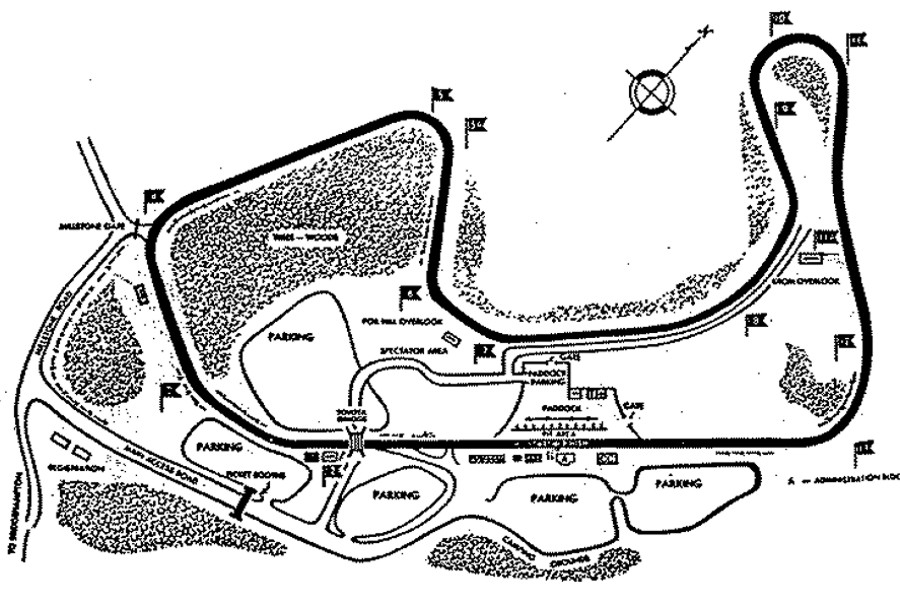
The Bridge“The Bridge” was a 2.85 mile, 13 turn, road course sitting on some prime real estate out near the tip of Long Island, New York. OK, when I was there it was only a decade past being a potato farm but the area was growing by leaps and bounds. Today you can drive a golf cart on the same pavement that Mark Donohue, Dan Gurney, Bruce McLaren, Paul Newman, Jackie Stewart, and Rufus drove. And, of course, me.

My good friend and crew chief Rufus says he never drove my cars at Bridgehampton; he drove only to the flag stations. The earlier named star, racing legend Rufus Parnelli Jones, started on the pole with a 1:44.04 lap time in the 1969 Trans Am race.

Stirling Moss called it the “most challenging course in America.”

I was a year too young to set foot on a race track when I earned my National license in Flagging & Communications. I jumped the fence and earned my National competition license shortly after I did become “legal.” And it all started at the Bridge.

“All who have raced there know that the earth is flat and ends in the sand at turn two,” Bruce MacInnes said once. He was just another amateur racer when I knew him but he grew up to be Chief Instructor at Skip Barber’s Racing School. I have kept the hammer down through that turn; the temptation to feather the gas there is great.

Over in the political department last week, I remarked that (most) people apparently want to live in pigeonholes. Maybe it’s because they don’t have to think there.

That resonated for me in a way that transcended politics.

People reading this know I’m a news and political junky but how many readers know that I’m a mechanical engineer? Or a landscape photographer? How about that I chopped down some of Vermont’s vast fiberglass forest to build the 30′ production catamaran that I also designed? That I have skied the Alps and the Chesapeake, managed a movie theater in Times Square, or taught in Vermont Colleges? Perhaps you do know I anchor a local teevee show but not that I taught lifesaving. Or that I raced cars.

We get pigeonholed.

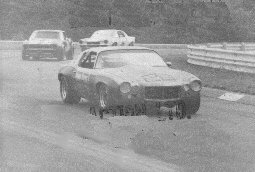
Pretty much everyone appreciates that Paul Newman won an Academy Award for The Color of Money. I knew him as one the drivers who pushed my Camaro along the pit lane when we were sitting waiting for a red-flagged race to restart. Bob Sharp once said PLN could have been world champion had he started racing before he was forty years old. He was that good. Who knew?

We get pigeonholed.

Neuroscientist Dave Sulzer, a professor at Columbia, studies how the different parts of the brain communicate and pursues treatments for certain diseases. In his other life, he co-founded the Thai Elephant Orchestra, a 16-elephant ensemble that performs in Lampang, Northern Thailand. Their second album includes the music of Beethoven and Hank Williams. Who knew?

We get pigeonholed.

Here in North Puffin my public persona is arts council chair and newspaper columnist. And occasional geek. Discovering that I can drive anything with wheels or build a dovetail joint for a cabinet drawer surprises most everyone.

“The emotional rewards of driving this turn ‘flat out’ are just as intense as the physical consequences of blowing it,” Mr. MacInnes said about Turn Two at the Bridge.

The rewards of living outside of the pigeons’ roost smell pretty good, too.


71 Camaro


Rufus suggested I list the race cars I’ve owned and driven.

  • ’60 TVR. This car was allegedly Mark Donohue’s but we never confirmed that. It spent an interesting afternoon with a tow rope through the windshield opening.
  • Triumph TR4. My “school” car. Came with a Mercury wagon tow car painted to match. I learned that front engine/RWD drive cars handle differently than rear engine/RWD drive cars when Porsche driver Alan Howes gave me the hot line at the New Thompson Speedway. Rufus eventually bought it from me and made it into a much better race car than when I owned it.
  • ’69 Camaro. The blue car which started out life painted yellow and which we raced in red-and-white.
  • ’71 Camaro. The gold car, built at Three Pines Farm. This was my primary ride from the time it was new until I smacked the wall at Charlotte and put an end to it.
  • Lotus Formula C. I drove this at Pocono to get some “logbook time” and learned that being able to see the tires going round and round is very distracting.

The 1969 Trans-Am at the Bridge.