Blow Job

A cold front blew through the North Country July 8. We had clouds on and off but no rain in North Puffin; it did spawn a tornado in Syracuse that killed four.

“There is a pattern of extreme weather that is different,” Gov. Andrew Cuomo said in a nod to Global Warming. “We don’t get tornadoes in New York. Anyone will tell you that. Well, we do now, and this new normal of extreme weather is a challenge for government, it’s a challenge for first responders and it’s a challenge for every citizen in this state.”

Huh. No tornadoes?

The 2007 Brooklyn tornado, an EF-2, was the strongest tornado on record to strike in New York City. Albany County has had six since 1973 and none since 1998. Cattaraugus County had 15 between 1961 and 2010. Essex County has had three, in 1952, 1958, and 1978. Then there was the 1900 Westchester County tornado and the 1904 Chappaqua tornado. And so on. Anyone with 30 seconds (that’s 29.69 seconds to type and 0.31 seconds to processing time) and access to Google can find 1,720,000 results on tornadoes in New York. That’s how I found the Tornado Project with its interesting data.

I understand politicians have agendas. I hate being lied to.

It’s worse when they think we’re too stupid to know the truth.

It’s atrocious when the media simply publishes the propaganda as fact.


“We do get tornadoes in New York,” WPTZ Chief Meteorologist Tom Messner said tonight.


Guest Post: George says You Have to Buy the Gas

I went to WalMart this morning and bought a nice brushed chrome desk lamp to put beside my bed to replace the one that got knocked off by one of the cats.

This was made in China, and it only cost $9.97.  When I got home, I put a bulb in it and plugged it in, and it did not work.  I changed bulbs and it still did not work.  Pissed me off.

I’m taking it back tomorrow and exchange for another made in china that hopefully works.  I’ll make sure it works before I leave the store with it.

What really grinds my ass is that it’s a ten mile round trip, and that equates to about $3 in my huge, gas guzzling Ford Explosion.   So, the freaking lamp will end up costing me $16 — all things considered.

— George Poleczech

Process

An apparently regular reader (equally apparently “unencumbered by the thought process”) took me to task on Facebook recently.

“The painfully obvious fact [is] that your blog
is just a rehash of other right wing blogs,”
–Annabelle Proctor.

Heh. That statement is oddly pleasing because it tells me two things:
• that visitor reads right wing blogs, something I rarely do; and
• other writers have obviously found the same data and quotes I did.

North Puffin Gallery IconsStill, it means it’s time for another look under the hood at how I do this job and what this job is. Then I get to comment. It’s what I do.

I’ve been a small town newspaper columnist and op-ed writer for more than 30 years. Back in 1997, an online journal asked me for 10-1/2 Hot Tips for Small-town Op-ed Writers. I’m pleased that that advice is still excellent, but it did leave out a couple of tips.
• A story without facts is guesswork.
• A story without a source is a campfire tale.

Yes, I break Rule #3 (“Avoid hot topics in the national or international news.”) more often than I should.

Rule #6. “Every fact requires two independent sources; the editor may not have time to authenticate your original research. Make sure your facts are right.”

Journalism is simply finding a fact, determining its importance, and then sharing that fact. Editorial writing is nearly the same. Find the fact, interpret its importance, and share both.

PROCESS
I don’t write in a vacuum; I do write about what happens to me and around me. That means I generally look to three initial sources for the information I use to underpin each piece:

1. Direct quotes from actual newsmakers. Remembering that I am a small town writer, this is both easier and harder for me. It’s very easy for me to call up a local race car driver or the former governor for an interview because either one may have been here for drinks last week. It’s a lot harder for me to call up President Obama for the same. Fortunately, what national newsmakers say is usually recorded and posted in its entirety online. Google is my friend.
2. Actual print newspapers (I refer to the NYTimes, Wall Street Journal, and Washington Post for most national news because they are usually accurate; my other sources are typically local media, including the ones I write for).
3. Television news for the headlines. I generally watch ABC or NBC News in the evening and CBS’ Face the Nation on Sundays. I haven’t seen a Fox News report in over a year.

Given that initial fact, my next job is to find independent confirmation. Here’s how that happens.

Ms. Proctor particularly objected to a piece I wrote in 2009. It was one of many times I have caught Mr. Obama in a lie. [As an editorial aside, I suspect she objects because I don’t pull punches when I catch her hero lying. She, of course, believes everything he says.]

Our discussion was whether some people are better off or worse after the change to Obamacare. Ms. Proctor was both right and wrong in saying “ACA will regulate health insurers until Americans evolve to the point that we demand single payer.”

I corrected her with the fact that we had tried that in Vermont as I outlined here in 2009. Even today, only a small number of the Vermonters clustered in Montpelier demand single payer.

Rather than disputing the facts, Ms. Proctor picked one line of the piece

[In selling his plan, President Obama said, “We have the AARP on board” to endorse the bill. Too bad AARP refuted that statement.]

and opined that my sources were suspect.

Alrighty, then.

I first found the AARP info I quoted in a report titled, “President Obama’s ‘Senior’ Moment?” by Kristina Wong which appeared on ABC News on August 11, 2009. That was the day before my own piece appeared.

“Kristina Wong blogs with a right wing slant,” she wrote. “Finding right wing blogs similar to yours was not difficult.”

Of course it wasn’t. When the President
of the United States lies, it goes viral.

What sources did Jake Tapper and Rachel Martin use to assure the accuracy of Ms. Wong’s report? The two most obvious ones were ABC’s own recorded video of Mr. Obama stating he had “the AARP onboard” in the health insurance reform “town hall” in Portsmouth, New Hampshire. Interestingly, that wasn’t the first or last time he said that as this video and as his own published remarks show.

AARP Chief Operating Officer Tom Nelson issued this statement, “While the President was correct that AARP will not endorse a health care reform bill that would reduce Medicare benefits, indications that we have endorsed any of the major health care reform bills currently under consideration in Congress are inaccurate.”

Rule #6. “Every fact requires two independent sources.” Done. Dusted.

COMMENTARY
“Inaccurate”?

Unfortunately, that page is no longer on the AARP site.

Further, then-White House spokesman Robert Gibbs backed away from Mr. Obama’s lies in New Hampshire. Asked if the president misspoke, Mr. Gibbs answered simply, “Yes.”

“Misspoke”? Nice spin.

What have we learned?

1. My piece was accurate as written and its thrust is accurate today. For the record (after heavy political lobbying), AARP did announce its endorsement of the Unaffordable Care Act on November 5, 2009, three months after my piece appeared.
2. Ms. Proctor normally accepts ABC News as a trusted source. Except when they don’t confirm her bias.

“Obama might have offered an opportunity for real reform had it not been for the right wing obstructionists and their enablers,” she wrote, “including a media more interested in sensationalism and gotcha journalism than in truth and accuracy.”

Now I get it. The NYTimes, Wall Street Journal, and Washington Post, as well as ABC, CBS, NBC and PBS News are all “more interested in sensationalism and gotcha journalism than in truth and accuracy.”

Critical thinking. Random House defines it as “disciplined thinking that is clear, rational, open-minded, and informed by evidence.”

It’s too bad naysayers like Ms. Proctor are unable to bring any level of critical thinking to their own responses.

 

Know the Code, Part II

I wrote about my regular annual physical and bloodletting last week.

The family has been concerned about a little bump on my chest although the doc calls it a sebaceous cyst and says not to worry about it. I do worry at it some since it sits right about where I like to scratch.

Regular readers will remember that I am pugnaciously parsimonious (Rufus says that is spelled “c-h-e-a-p   b-a-h-s-t-i-d”) so I also fretted over how much that office surgery might cost.

Benign skin lesions include sebaceous (epidermoid) cysts and a bunch of other big words. Medicare apparently considers removal of benign skin lesions as medically necessary, and not cosmetic, when any of the following is met and is clearly documented in the medical record, operative report, or pathology report:

intense itching, burning, irritation, pain, tenderness, chronic, recurrent or persistent bleeding, physical evidence of inflammation (e.g., purulence, oozing, edema, erythema, etc.)

Do not watch this:

The surgical director of Aurora Clinics shows how to remove an epidermoid or sebaceous cyst.

Really, REALLY do not watch this:

A Do-It-Yourself sebaceous cyst removal. This is one BFF “showing off her skills” with a single edged razor at home on her friend. Do not try this at home.

“Of course I watched them, plus another DIY where they squirt the creamy sebaceous fluid out all over the camera and wall,” Liz Arden told me. “I was eating breakfast at the time — oatmeal. Mmmmm.”

Dermatologists may also use laser treatments to remove sebaceous cysts.


The doc said all my blood tests were good. He made an appointment with a local surgeon to have the cyst removed and gave me a bottle for, well, you know.

I put off the procedure until next month. My Gold Obamacare wants me to meet the deductible and pay a 20% co-pay on diagnostic tests including the x-ray and blood work as well as the outpatient surgery. Medicare has a small deductible and the same 20% co-pay, but the plan I bought pays those.

The catch, of course, is that Medicare has to approve all the procedures.

I rescheduled the appointment with the surgeon. Actually, I rescheduled three appointments with the surgeon.

He plans to do the procedure in the hospital. With a little local anesthetic. Which means I wonder why I have to see him in the office before and again after, let alone go to the hospital and incur those charges. Other than to churn the bill.

I Googled and found very little about the pre- and post-procedures for removing small cysts. Apparently it’s not complex enough to require much of either.

NIH reports that “Excision of sebaceous [or] epidermoid cysts is a common surgical [office] procedure performed by family physicians.”

This is the same surgeon who called me in for an office visit specifically for my preventive colonoscopy last year. He charged extra for that and, of course, all Blue Cross could do was shrug.

I told one of my clients, a local judge, the story. He was aghast. He also has a lot of experience with the local health care providers. He suggested a dermatology practice with a resort-like name in Winooski, about half an hour from here. “They’ll bring you in to their office, swab it, and zip-zip, you’re done,” he said. “They’re good.”

I’ll call them this week.

Still, I’ll bet that original surgeon Knows All the Codes and how much he can bill on each.


Know the Code

I had my regular annual physical and anal probing last week but I had to make an earlier visit to the doc’s office that they might let some blood.

Regular readers might be aware that I am pugnaciously parsimonious (Rufus says that is spelled “c-h-e-a-p   b-a-h-s-t-i-d”) so I was curious about how much the tests cost and whether or not my Obamacare Gold policy would cover them.

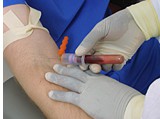
Drawing Blood for a TestObamacare covers preventive care.

I called my insurer, Blue Cross.

“Blood tests aren’t preventive care, even if they are done as part of a preventive care visit,” the rep said. Unless they are coded as preventive care and they fit the government guidelines. And the test is done on Wednesday after 5 p.m. or any time Saturday morning. With a blue-topped test tube. Not the red one.

That means I could need to make my deductible before they would pay 80% of the cost of the two or three hundred bucks worth of tests. Amount I’ve spent toward my deductible this year: $0.

My Blue Cross rep was very knowledgeable about my concerns. I couldn’t tell him exactly what tests the doctor wanted, so he volunteered to call their office to find out.

The doc’s office has no idea what codes they use; they order the tests from the lab in English. Or Latin. Or maybe Abenaki. They sent the Blue Cross guy to “billing.” Billing has no idea what codes they use; they simply invoice Blue Cross for the needle stick.

Ah hah. The LAB codes the analysis but they won’t know what codes they will use until the doc’s office sends in the request. In some non-accounting language.

The doc’s office did admit that they draw blood for three tests.

Complete Blood Count
▪ White blood cell count.
▪ White blood cell types.
▪ Red blood cell count.
▪ Hematocrit.
▪ Hemoglobin.
▪ Red blood cell indices.
▪ Platelet count.
▪ Mean platelet volume.
Comprehensive Metabolic Panel
▪ Albumin
▪ Alkaline phosphatase
▪ ALT (alanine aminotransferase)
▪ AST (aspartate aminotransferase)
▪ BUN (blood urea nitrogen)
▪ Calcium
▪ Chloride
▪ CO2
▪ Creatinine
▪ Glucose test
▪ Potassium test
▪ Sodium
▪ Total bilirubin
▪ Total protein
Lipids Panel

The Complete Blood Count is diagnostic, not preventive, and not covered under ObamaCare. Ditto the Comprehensive Metabolic Panel, except when it is. Both plus Lipids, a PSA (Prostate-Specific Antigen), and even the Shingles vaccine could be covered if you code them correctly.

The hospital did tell me a not-covered Complete Blood Count costs about $29 and the Comprehensive Metabolic Panel, $35. The Lipid panel is $46. A PSA test costs between $60 and $80. I don’t get one anymore because the doc says my anal probe is always “fine.” And because it is known to be diagnostically flawed. The shingles shot cost between $200 and $250 alone.

There is a catchall code V70.0 that identifies many of the tests as “preventive.” I just had to remind the doc’s office to use it.


But wait. There’s more!

I should not have to manage this.
As she was filling and filling and filling the gallon-sized test tubes with my blood, I told my favorite nurse she should have a price list on the wall.

“The corner gas station does it. The grocery store does it. Restaurants do it. Even Walmart does it,” she agreed.

She doesn’t know how to get the prices, though. They are hidden and scattered and seem to change by the time of day and color of my belt buckle.

The doc also thinks providers should post a chart of charges. He doesn’t know how, though.

Everyone seems to agree. No one seems able or willing to do it.

As anti-regulation as I am, I suspect regulation or law
will be the only way to get ‘er done.